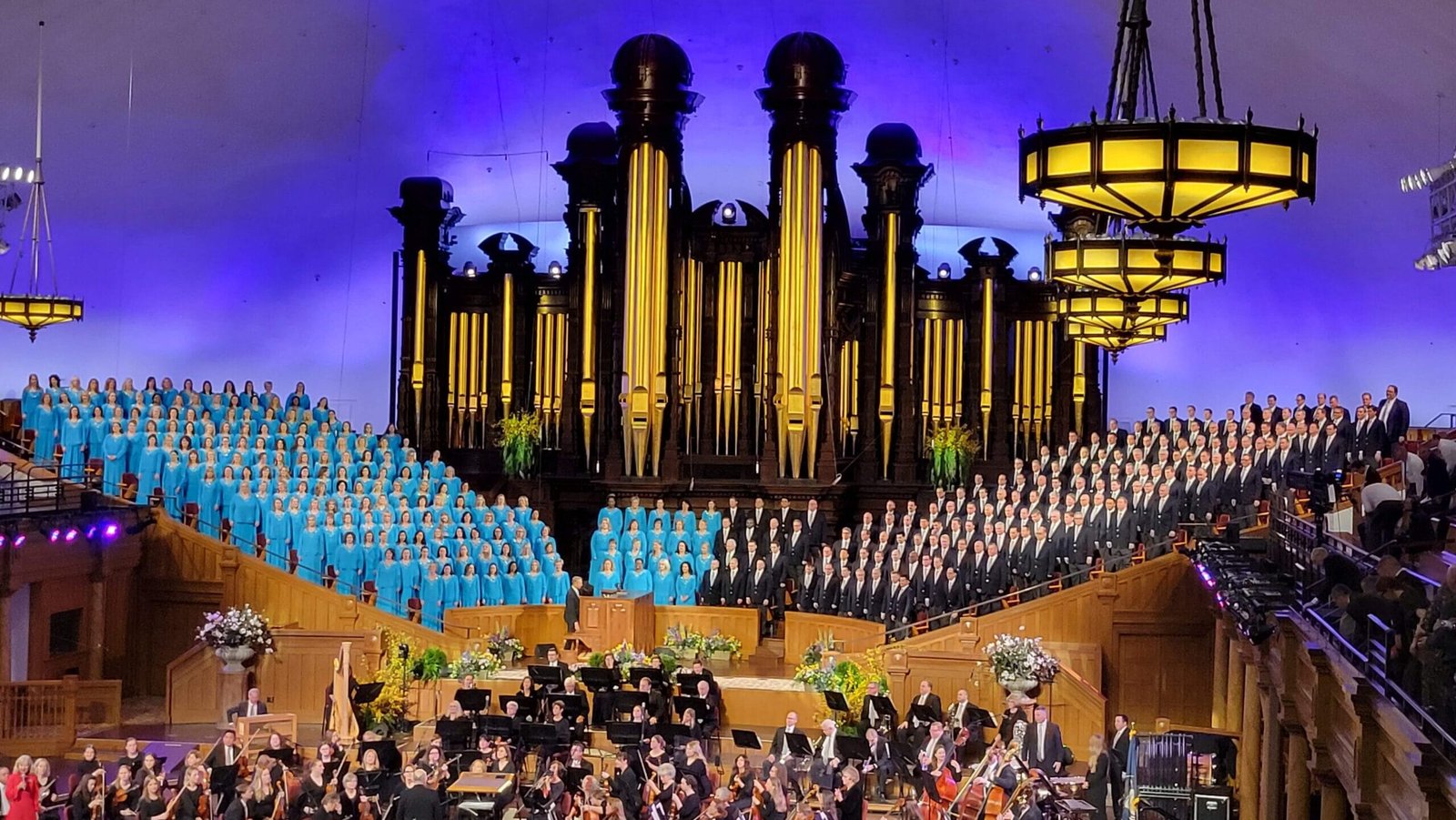
This is a continuation of my previous post titled “The Power of Music in Worship.”
As king of Israel, David appointed musicians among the Levites. These Levite “singers” had a significant role in the daily rites of worship. Their music became inseparable from the sacred practices of sacrifice.
I’ve written summaries of the books of 1 and 2 Samuel, titled “The Story of 1 Samuel: Prophets, Kings, and Covenants,” and “The Story of 2 Samuel: the Rise and Fall of a King.” The story of the Levite singers is found in 1 Chronicles, but for some reason is absent in 1 and 2 Samuel. This is a beautiful narrative that teaches us more about the power and influence of music, and we will miss it if we don’t study the books of Chronicles.
David was introduced as a musician
David is known as one of the greatest kings of Israel, but despite all his great works, his first introduction in the book of 1 Samuel is as a musician.
After the Spirit of the Lord departed from Saul,1 his servants suggested they find someone who was “a cunning player on a harp,”2 so when Saul was troubled, the man could play and comfort Saul. One of Saul’s servants said he knew that David, a son of Jesse was “skillful in playing.”3 Saul sent for David, and when Saul was troubled, David played his harp, and Saul was “refreshed.”4
David was not introduced as a warrior or a leader. His story began as a young man who was skilled in music and understood the power of music to heal.
David worshiped with music
After Saul died and David was anointed king of Israel, he brought the ark of the covenant into Jerusalem “with shouting, and with the sound of the trumpet.”5 David “danced before the Lord with all his might.”6
David’s wife Michal was embarrassed at David’s behavior because she didn’t think that was how a king should act, but David told Michal that his dancing “was before the Lord.”7 David loved the Lord, and he worshiped the Lord through music and dancing.
David appointed musicians among the Levites
The bringing of the ark into Jerusalem, as told in 2 Samuel 6, was a remarkable event. But there is an aspect to that story that is only told in 1 Chronicles 15. David appointed the Levites to carry the ark, and as part of their responsibilities, certain Levites were assigned as musicians to accompany the ark.
After the Israelites were delivered out of Egypt, Aaron and his sons were anointed and sanctified to minister in the priest’s office.8 Moses and Aaron were of the tribe of Levi,9 and perhaps because of this lineage, the tribe of Levi was given to Aaron and his sons to serve in the tabernacle.10 Because of their service in the tabernacle, the Levites were separated from Israel, or set apart.11
When David became king and brought the ark into Jerusalem in triumph, he asked the Levites to carry the ark, acknowledging their authority to minister unto the Lord.12 But he didn’t just ask them to carry the ark; he also appointed musicians among the Levites to accompany the processional:
David also commanded the chiefs of the Levites to appoint their brothers as the singers who should play loudly on musical instruments, on harps and lyres and cymbals, to raise sounds of joy.13
The chiefs of the Levites appointed Heman, Asaph, and Ethan as the singers, or the leaders of the musicians.14 There were others appointed to play instruments such as bronze cymbals, harps, lyres, and trumpets. They appointed Chenaniah to be the leader of the Levite musicians because “he understood it.”15 In other words, Chenaniah was skilled in music and had the capacity not just to play, but to teach and lead others.
The book of 1 Chronicles paints quite a picture of the processional accompanying the ark into Jerusalem:
David and the elders of Israel and the commanders of thousands went to bring up the ark of the covenant of the Lord from the house of Obed-edom with rejoicing. . . . David was clothed with a robe of fine linen, as also were all the Levites who were carrying the ark, and the singers and Chenaniah the leader of the music of the singers. And David wore a linen ephod. So all Israel brought up the ark of the covenant of the Lord with shouting, to the sound of the horn, trumpets, and cymbals, and made loud music on harps and lyres.16
Thus began the “singers” among the Levites. Although we think of “singers” as people using their voices to make music, in the context of 1 Chronicles, the “singers” referred to the Levite musicians, whether they used their voices or played instruments. The performance of music with the daily sacrifices became a perpetual responsibility of the Levite singers.
The singers continued their service after the ark was brought into Jerusalem
After the ark was placed in the location chosen by David, “he appointed certain of the Levites to minister before the ark of the Lord, and to record, and to thank and praise the Lord God of Israel.”17 Among those appointed was Asaph, who “was the chief.”18 Asaph, of course, was one of the three singers whom the Levites had appointed to be the chief musicians. So the work of ministering before the ark, and thanking and praising God, was to be done by the musicians. It is no wonder, then, that on that day, David delivered a psalm to be “sung to the Lord by Asaph and his brothers.”19
After that celebration, David “left there before the ark of the covenant of the Lord Asaph and his brethren, to minister before the ark continually, as every day’s work required.”20 The work of the musicians became a part of the daily worship offered by the Levites.
The Levite singers continued through the reign of Solomon
Before David’s death, he appointed his son Solomon king over Israel.21 To commemorate that great event, David “gathered together all the princes of Israel, with the priests and the Levites.”22 David specifically taught that the Levites’ duty was to help the sons of Aaron with their service in the house of the Lord, which included “to stand every morning to thank and praise the Lord, and likewise at even.”23 This described the role of the singers and their participation in the daily ordinances.
As David was preparing to turn the kingdom over to Solomon, he further organized the singers among the Levites. The way he described it shows the importance he placed on the role of music in their worship:
David and the captains of the host separated to the service of the sons of Asaph, and of Heman, and of [Ethan], who should prophesy with harps, with psalteries, and with cymbals.24
The Hebrew word translated to “prophesy” in this context means to “speak (or sing) by inspiration.”25 The role of the Levite singers was not performance, it was not entertainment, it was worship. They were involved in the daily performances of ordinances, and their music was intended to be prophetic and revelatory, something that should accompany all worship services.
The Levite singers performed at Solomon’s dedication of the temple
After the temple was completed, Solomon offered a dedicatory prayer.26 Before he performed the prayer, the Levite singers performed, and the glory of the Lord filled the temple:
Also the Levites which were the singers, all of them of Asaph, of Heman, of Jeduthun [also called Ethan], with their sons and their brethren, being arrayed in white linen, having cymbals and psalteries and harps, stood at the east end of the altar, and with them an hundred and twenty priests sounding with trumpets:
It came even to pass, as the trumpeters and singers were as one, to make one sound to be heard in praising and thanking the Lord; and when they lifted up their voice with the trumpets and cymbals and instruments of musick, and praised the Lord, saying, For he is good; for his mercy endureth for ever: that then the house was filled with a cloud, even the house of the Lord;
So that the priests could not stand to minister by reason of the cloud: for the glory of the Lord had filled the house of God.27
It is fascinating to me that even before Solomon offered his dedicatory prayer, the glory of the Lord filled the temple, seemingly as a result of the Levite singers worshipping with music.28
Later reformation efforts included restoring the role of the singers
Following Solomon’s death, the kingdom of Israel split into a northern and a southern kingdom. The people became embroiled in idolatry, and as a result, Assyria invaded and carried away the northern ten tribes. King Hezekiah, who was king of Judah when Assyria invaded, was righteous and instituted significant reforms to turn the people back to the worship of Jehovah. He “opened the doors of the house of the Lord, and repaired them,”29 and in conjunction with repairing the temple, he told the Levites to sanctify themselves, including the “sons of Heman.”30 This is clearly a reference to the Levite singers, as Heman was one of the three original leaders of the singers called by David.
After the temple was cleansed and all the vessels of the temple returned, Hezekiah gathered the rulers of the city and went to the house of the Lord to offer sacrifices, and the services included music by the Levite singers:
And he set the Levites in the house of the Lord with cymbals, with psalteries, and with harps . . . . And the Levites stood with the instruments of David, and the priests with the trumpets.
And Hezekiah commanded to offer the burnt offering upon the altar. And when the burnt offering began, the song of the Lord began also with the trumpets, and with the instruments ordained by David king of Israel.
And all the congregation worshipped, and the singers sang, and the trumpeters sounded: and all this continued until the burnt offering was finished.
And when they had made an end of offering, the king and all that were present with him bowed themselves, and worshipped.
Moreover Hezekiah the king and the princes commanded the Levites to sing praise unto the Lord with the words of David, and of Asaph the seer. And they sang praises with gladness, and they bowed their heads and worshipped.31
This passage refers to Asaph as “the seer.” Asaph was one of the original three leaders of the singers, and his role was much more than a musician. The role of the singers was to combine music with worship, such that music and worship were not two separate acts. The Israelites sought revelation through music.
The role of the singers was lost during the Babylonian captivity
The history of Israel is fraught with invasion and captivity. In about 721 B.C., the Assyrians invaded and carried away the northern ten tribes.32 Years later, the nation of Babylon conquered Assyria, and in about 587, the Babylonians captured Jerusalem and took a significant portion of the Jewish people back to Babylon.33
Psalm 137 expresses the deep sorrow of the Jews in their captivity, and the language of this song shows how interwoven the Levite singers were in the Jewish culture and worship:
By the rivers of Babylon, there we sat down, yea, we wept, when we remembered Zion.
We hanged our harps upon the willows in the midst thereof.
For there they that carried us away captive required of us a song; and they that wasted us required of us mirth, saying, Sing us one of the songs of Zion.
How shall we sing the Lord’s song in a strange land?34
This tragic, sorrowful language expresses the despair of the Jews being away from Jerusalem. But it is also reminiscent of the Levite singers, and the close relationship between music and the worship practices of the Jews.
The harp was David’s primary instrument, and perhaps representative of all musical instruments used by the singers. The “songs of Zion,” and the “Lord’s song,” certainly could be any song of the heart, or any “prayer of the righteous,” but it could also have reference to the Jewish worship services performed at the temple. The reference to “strangers” was frequently used in the Old Testament when talking of someone who did not share the Israelite beliefs. So a “strange land” could refer to any land outside of Jerusalem. Although this psalm isn’t limited to referencing the Levite singers, it certainly does implicate the role of music in their worship services, and the deep loss they felt at not being able to worship at the temple.
When they returned to Jerusalem, the singers resumed their duties
The books of Ezra and Nehemiah describe the events of the Jews’ return to Jerusalem, which began in about 537 B.C., and continued through about 424 B.C.35 After the nation of Persia conquered Babylon, the Persian king Cyrus ordered the return of the Jews to rebuild the temple.36 There are frequent references in Ezra and Nehemiah about the Levite singers. For example, the first group to leave Babylon included “The singers: the children of Asaph, an hundred twenty and eight.”37
In the second year after their return to Jerusalem, they laid the foundation of the temple, and their celebration involved the Levite singers:
And when the builders laid the foundation of the temple of the Lord, they set the priests in their apparel with trumpets, and the Levites the sons of Asaph with cymbals, to praise the Lord, after the ordinance of David king of Israel.
And they sang together by course in praising and giving thanks unto the Lord; because he is good, for his mercy endureth for ever toward Israel. And all the people shouted with a great shout, when they praised the Lord, because the foundation of the house of the Lord was laid.38
There are many other references to the Levite singers, or the sons of Asaph, demonstrating that their role as musicians was tied to the Levitical responsibilities of worship.
The Levite singers wrote many of the Psalms
The Psalms are songs of praise, and “are a collection of some of the very finest of the world’s inspirational literature.”39 It is believed that David wrote about half of the psalms, and it makes sense that the Levite singers, who were originally organized by David, would have contributed to the collection of psalms.
The three original leaders of the Levite singers were Heman, Asaph, and Ethan.40 It is believed that Heman wrote Psalm 88, that Ethan wrote Psalm 89, and that Asaph wrote Psalms 50, and 73-83. Additionally, there are many other psalms written by unnamed Levite singers, referred to generally as the “sons of Korah,” and include Psalms 42, 44-49, 84-85, and 87.
Many of the psalms are directed to the “chief Musician.”41 David had established the Levite singers as those with musical responsibilities, so it can only be that the “chief Musician” was the head, or chief, of the Levite singers. When the Levite singers were organized, a man named Chenaniah was appointed as the chief of the singers, “because he was skilful,”42 or, because “he understood it.”43 Clearly, they were trained in music, indicating that music was studied and taught.
If music was studied, it also makes sense that they would have music notation to help other musicians know how a piece of music should be performed. The Psalms contain musical notations such as “Selah,” which is a suspension of the music, or a pause.44 Psalm 4 is directed “to the chief Musician on Neginoth,” and “Neginoth” is a stringed instrument.45 Psalm 5 is “To the chief Musician upon Nehiloth,” and a “Nehiloth” is most likely a wind instrument.46 These few examples demonstrate that the Psalms included musical notation with instructions for their performance, to be carried out by the Levite singers.
The Psalms demonstrate that the Levite singers were expert at their craft. They studied, taught, and performed for the benefit of the whole community.
Music continues to be integral to our worship
The role of music in worship has not changed since the days of David. Music is an essential element of our worship services.
In our sacrament meeting, we are instructed to sing a congregational hymn as part of the ordinance of the sacrament, and that hymn “should refer to the sacrament itself or to the sacrifice of the Savior.”47
Music in sacrament meeting is not just a nice idea, and it’s not just something we do to pass the time while the bread is broken. President Oaks has taught the importance of music in sacrament meeting:
The music of sacrament meeting is a vital part of our worship. The scriptures teach that the song of the righteous is a prayer unto the Lord (see D&C 25:12). The First Presidency has declared that “some of the greatest sermons are preached by the singing of hymns” (Hymns, ix). How wonderful when every person in attendance joins in the worship of singing—especially in the hymn that helps us prepare to partake of the sacrament.48
Sacred music is an essential element of our worship. And so it makes sense that the Church has gathered and compiled hymns for use in our worship.
The Church’s efforts to publish hymns
In order to facilitate the use of sacred music in worship, the Church has made a significant effort to publish hymns. Just as the Levite singers wrote psalms during the days of David. An essential aspect of the restoration of the gospel of Jesus Christ has included writing and compiling hymns.
In July 1830, just three months after the organization of the Church, the Lord instructed Emma Smith to “make a selection of sacred hymns, as it shall be given thee, which is pleasing unto me, to be had in my church.”49 Why would the Lord make this a priority? Because music is an essential element of our worship:
For my soul delighteth in the song of the heart; yea, the song of the righteous is a prayer unto me, and it shall be answered with a blessing upon their heads.50
Emma’s hymnbook was published in 1835 and titled “Collection of Sacred Hymns.”51 The preface stated the important role that music plays in our worship:
In order to sing by the Spirit, and with the understanding, it is necessary that the church of the Latter Day Saints should have a collection of “Sacred Hymns,” adapted to their faith and belief in the gospel, and, as far as can be, holding forth the promises made to the fathers who died in the precious faith of a glorious resurrection, and a thousand years’ reign on earth with the Son of Man in his glory. Notwithstanding the church, as it were, is still in its infancy, yet, as the song of the righteous is a prayer unto God, it is sincerely hoped that the following collection, selected with an eye single to his glory, may answer every purpose till more are composed, or till we are blessed with a copious variety of the songs of Zion.52
The hymnals have been revised and expanded over the years, and a history of those compilations can be found on the Church History Library website, under “History of Hymnals.” In June 2018, the Church announced that the hymnbook would be revised, and this would be a multiyear project “to gather and review the current music collection, new member-submitted compositions for the hymnbook, and songs from other Christian faith traditions.”53 The release of those hymns is ongoing and is titled “Hymns for Home and Church.”
We can improve our worship with sacred music
The story of the Levite singers is fascinating to me. Throughout 1 and 2 Chronicles, we see many references to the “singers,” or “Heman,” or “Asaph,” indicating the continuing impact of the Levite singers. For some reason, these details are not found in 1 and 2 Samuel, showing us the value of studying all books of scripture, even when the stories seem similar.
The example of the Levite singers shows us the integral relationship between sacred music and the worship of the Lord. Music is not just fun, and it’s not just entertainment. Sacred music connects us with heaven. Sacred music can help facilitate revelation. There is value in not just listening to sacred music, but in trying to better understand it. As we study and participate in the singing of sacred hymns, we can improve our worship.
References
- 1 Samuel 16:14. ↩︎
- 1 Samuel 16:16. ↩︎
- 1 Samuel 16:18 (ESV). ↩︎
- 1 Samuel 16:23. See also 1 Samuel 18:10. ↩︎
- 2 Samuel 6:15. ↩︎
- 2 Samuel 6:13-14. ↩︎
- 2 Samuel 6:21. ↩︎
- Exodus 28:1; Leviticus 8:6-9. ↩︎
- Exodus 6:16-20. ↩︎
- Numbers 3:5-9; Numbers 8:19-22. ↩︎
- Numbers 8:14-15. ↩︎
- 1 Chronicles 15:2. ↩︎
- 1 Chronicles 15:16 (ESV). ↩︎
- 1 Chronicles 15:17. ↩︎
- 1 Chronicles 15:22 (ESV). ↩︎
- 1 Chronicles 15:25-28 (ESV). ↩︎
- 1 Chronicles 16:4. ↩︎
- 1 Chronicles 16:5 (ESV). ↩︎
- 1 Chronicles 16:7 (ESV). ↩︎
- 1 Chronicles 16:37. ↩︎
- 1 Chronicles 23:1. ↩︎
- 1 Chronicles 23:2. ↩︎
- 1 Chronicles 23:30. ↩︎
- 1 Chronicles 25:1. ↩︎
- “H5012 – nāḇā’ – Strong’s Hebrew Lexicon (KJV).” Blue Letter Bible. Accessed 12 Jun, 2026. https://www.blueletterbible.org/lexicon/h5012/kjv/wlc/0-1/. ↩︎
- 1 Kings 8:12-53. ↩︎
- 2 Chronicles 5:12-14. ↩︎
- Compare 1 Kings 8:10-12 with 2 Chronicles 5:12-14 to understand the chronology of events. It is fascinating to me that the books of Samuel and Kings don’t mention the Levite singers. The history of their role is only detailed in the books of Chronicles. ↩︎
- 2 Chronicles 29:3. ↩︎
- 2 Chronicles 29:14. ↩︎
- 2 Chronicles 29:25-31. ↩︎
- Guide to the Scriptures, “Israel-The Ten Lost Tribes of Israel.” ↩︎
- Chronology of the Old Testament, “Capture of Jerusalem.” ↩︎
- Psalm 137:1-4. ↩︎
- Chronology of the Old Testament, “Decree of Cyrus” through “Nehemiah’s second mission.” ↩︎
- Ezra 1:1-4, “Thus saith Cyrus king of Persia, The Lord God of heaven hath given me all the kingdoms of the earth; and he hath charged me to build him an house at Jerusalem, which is in Judah.” ↩︎
- Ezra 2:41. ↩︎
- Ezra 3:10-11. ↩︎
- Old Testament Student Institute Manual Genesis-2 Samuel, “The Psalms: Songs from the Heart of Israel,” https://www.churchofjesuschrist.org/study/manual/old-testament-student-manual-genesis-2-samuel/the-psalms-songs-from-the-heart-of-israel?lang=eng&id=p4#p4. ↩︎
- 1 Chronicles 15:17. ↩︎
- See, for example, Psalms 4-6. ↩︎
- 1 Chronicles 15:22. ↩︎
- 1 Chronicles 15:22 (ESV). ↩︎
- “H5542 – selê – Strong’s Hebrew Lexicon (KJV).” Blue Letter Bible. Accessed 24 Jun, 2026. https://www.blueletterbible.org/lexicon/h5542/kjv/wlc/0-1/. ↩︎
- “H5058 – nᵊḡînâ – Strong’s Hebrew Lexicon (KJV).” Blue Letter Bible. Accessed 24 Jun, 2026. https://www.blueletterbible.org/lexicon/h5058/kjv/wlc/0-1/. ↩︎
- “H5155 – nᵊḥîlâ – Strong’s Hebrew Lexicon (KJV).” Blue Letter Bible. Accessed 24 Jun, 2026. https://www.blueletterbible.org/lexicon/h5155/kjv/wlc/0-1/. ↩︎
- General Handbook, 19.3.2. ↩︎
- Ibid., https://www.churchofjesuschrist.org/study/general-conference/2008/10/sacrament-meeting-and-the-sacrament?lang=eng&id=p17#p17. ↩︎
- Doctrine and Covenants 25:11. ↩︎
- Doctrine and Covenants 25:12. ↩︎
- Collection of Sacred Hymns, 1835, Page iii, p. iii, The Joseph Smith Papers, accessed June 21, 2026, https://www.josephsmithpapers.org/paper-summary/collection-of-sacred-hymns-1835/5. ↩︎
- Ibid. ↩︎
- See “Background and Status” section on the webpage “Hymns for Home and Church.” ↩︎