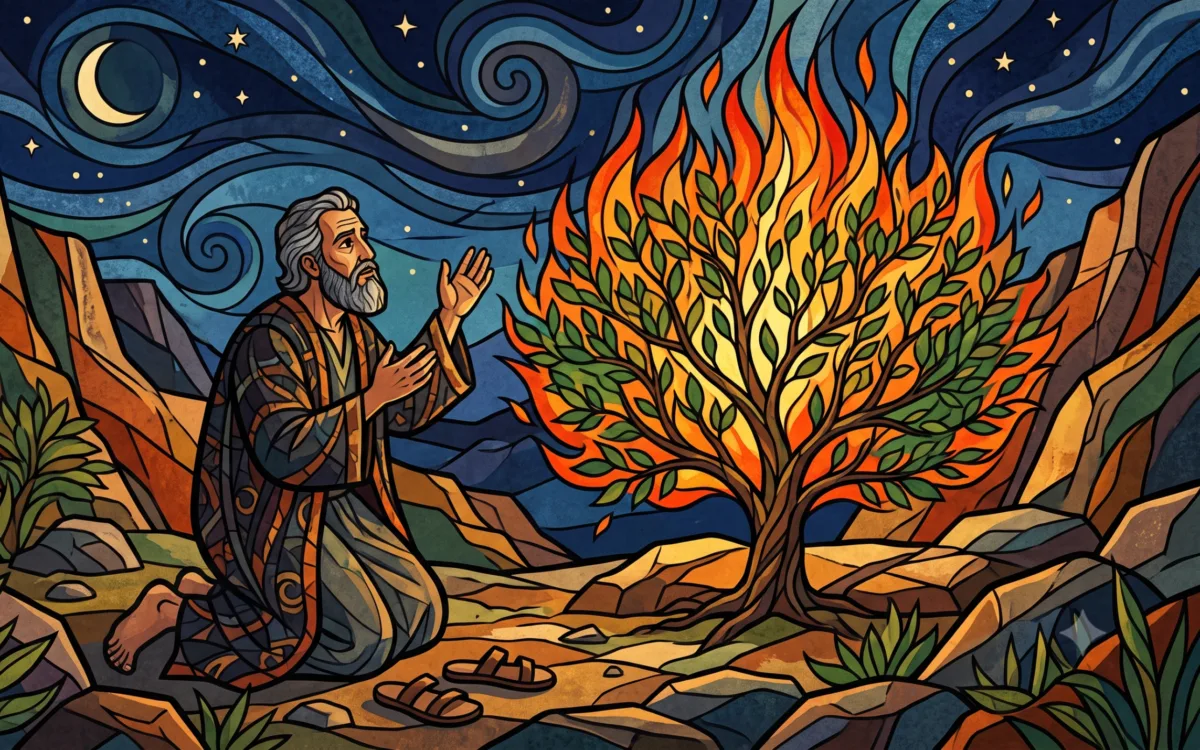
When Moses first went to Pharaoh, he said, “Thus saith the Lord God of Israel, Let my people go.”1 Pharaoh responded, “Who is the Lord, that I should obey his voice to let Israel go? I know not the Lord, neither will I let Israel go.”2 Pharaoh’s question was a defiant refusal to obey the Lord’s command. But the question itself has merit: Who is the Lord? We should ask this question sincerely and with an honest heart.
After the Savior healed the man who was born blind, He asked him, “Dost thou believe on the Son of God?”3 The man responded, “Who is he, Lord, that I might believe on him?”4 In contrast to Pharaoh’s intent, this man asked the question sincerely, wanting to know who he should worship.
The Old Testament teaches about the God of Abraham, Isaac, and Jacob. We learn about the Israelites, who were the covenant people of the Lord, but who turned to the worship of false gods. One of the primary teachings of the Old Testament is that the God of Abraham, Isaac, and Jacob is the one true God, and we need to make Him our priority to avoid worshipping the false gods of our society.
We need to understand the identity of God
Prophets have taught that we should center our lives on Jesus Christ. President Russell M. Nelson taught:
When the focus of our lives is on God’s plan of salvation . . . and Jesus Christ and His gospel, we can feel joy regardless of what is happening—or not happening—in our lives. Joy comes from and because of Him. He is the source of all joy. . . . For Latter-day Saints, Jesus Christ is joy!5
It can be a challenge to learn about Jesus Christ when studying the Old Testament. However, if we understand the role that the premortal Jesus Christ played in the Old Testament, we can learn a great deal about Him. The question, “Who is the Lord?” is answered by recognizing that Jesus Christ is and was Jehovah, the God of the Old Testament.
God is our Heavenly Father, and all of us “are literally children of God.”6 Jesus Christ was also a spirit child of our Heavenly Father, but He was the Firstborn7 and was appointed and foreordained to be our Savior.8 In the preexistence, He gained all knowledge and power,9 and under the direction of the Father, He created the Earth.10
As a result of the fall, all mortals were cut off from the presence of the Father.11 However, Jesus Christ fulfilled His role as our Savior even before His mortal birth by being our mediator with the Father.
President Joseph Fielding Smith explained that “all revelation since the fall has come through Jesus Christ, who is the Jehovah of the Old Testament. In all of the scriptures, where God is mentioned and where he has appeared it was Jehovah who talked with Abraham, with Noah, Enoch, Moses and all the prophets.” Now note this important principle: “The Father has never dealt with man directly and personally since the fall, and he has never appeared except to introduce and bear record of the Son.” Hence, Jesus Christ is our mediator with God the Eternal Father.12
Jesus Christ is and was the Great Jehovah, the God of the Old Testament.13
The name of the Lord is prevalent throughout the Old Testament
As prophets taught and wrote about the God of Abraham, they used His name. This name distinguished Him from other gods worshipped by other societies. Sometimes, the wording used to identify God can be confusing because it is primarily translated to “Lord” in English translations of the Bible. This word, “Lord,” is not a generic term for a generic god. It is an English word used in place of the proper name of God.
A great resource for studying the Bible is a website called “Blue Letter Bible.” I wrote about this in a prior post, “What Does It Mean to Fear God?” Because of its resources that can help us better understand the meaning of Biblical Hebrew, Blue Letter Bible is incredibly helpful in understanding the meaning of the term “Lord” in the Old Testament. Beginning in Genesis 2:4, the term “Lord” is written in all caps, looking like this:

Notice the capitalization of the word “Lord.” Using Blue Letter Bible, we can look up the Hebrew word that was translated to “LORD” in the King James Version of the Bible. It looks like this in Hebrew:
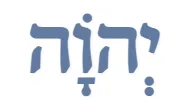
Although the King James editors translated this Hebrew word to “LORD,” in Hebrew this word is pronounced “yeh-ho-vaw,” which we translate to the English word “Jehovah.” The Hebrew word, Jehovah, translated to Lord in English, is the proper name of the God of Israel.14
So why do English versions of the Bible translate the name “Jehovah” to “LORD”? A commentary on the Blue Letter Bible website contains the following explanation: “The later Hebrews, for some centuries before the time of Christ, either misled by a false interpretation of certain laws (Ex. 20:7; Lev. 24:11), or else following some old superstition, regarded this name as so very holy, that it might not even be pronounced.”15 To respect this tradition, most English versions of the Bible translate the name “Jehovah” to “Lord,” but use small caps to indicate it is the proper name of God.
Recognizing the proper name of God in the Old Testament helps us better understand Jesus Christ’s role as God of the Old Testament. The term “Lord” when it appears in the Bible in all caps is not a generic title; it is a translation of His proper name, which we understand to be Jehovah. It distinguishes between the one true God and the false gods being worshipped by the societies surrounding the Israelites. It also helps us understand that Jesus Christ, the great Jehovah, was the God of the Old Testament, acting in His role as our mediator with the Father.
The Lord revealed Himself to Moses out of a system of polytheism
Abraham states that his “fathers” turned from righteousness, and began worshipping “the gods of the heathen,” including, “the god of Elkenah, and the god of Libnah, and the god of Mahmackrah, and the god of Korash, and the god of Pharaoh, king of Egypt.”16 So depraved were they in their worship of false gods, that they “turned their hearts to the sacrifice of the heathen in offering up their children unto these dumb idols.”17
We read in the story of Joseph that Jacob and his entire family traveled to Egypt and settled in the land of Goshen.18 While in Egypt, the Israelites multiplied and became such a great nation that the Egyptian king grew afraid, resulting in the Egyptians placing the Israelites in bondage.19 It is well-known that the Egyptians worshipped multiple gods:
During its more than 3,000 years of development, Egyptian religion underwent significant changes of emphasis and practice. Its pantheon of gods and goddesses was large—with some 1,500 named deities—and was not fixed. New gods appeared, and some ceased to be worshipped.20
When the Lord called Moses to deliver Israel out of Egypt, his first words to Moses identified who it was that was speaking:
I am the God of thy father, the God of Abraham, the God of Isaac, and the God of Jacob.21
Perhaps God introduced Himself to Moses because of Moses’ knowledge of the multitude of Egyptian gods. Moses was born to Levite parents but raised by the daughter of Pharaoh,22 so Moses was “learned in all the wisdom of the Egyptians.”23 It is logical that Moses was taught about the Egyptian gods. However, it is also likely that he knew about the God of his people.
Pharaoh’s daughter hired Moses’ biological mother to nurse him.24 Perhaps Moses’ biological mother was able to teach him about their worship of the Lord. Considering Moses essentially lived between two cultures, it makes sense that when God called him to deliver His people out of Egyptian bondage, Moses asked a very pertinent question:
Behold, when I come unto the children of Israel, and shall say unto them, The God of your fathers hath sent me unto you; and they shall say to me, What is his name? what shall I say unto them?25
Because of the plurality of gods in Egyptian society, Moses likely felt that he had to be clear about who was sending him. The Lord obviously agreed, as he answered Moses’ question with a clear statement about His identity:
God said unto Moses, I Am That I Am: and he said, Thus shalt thou say unto the children of Israel, I Am hath sent me unto you.
And God said moreover unto Moses, Thus shalt thou say unto the children of Israel, The Lord God of your fathers, the God of Abraham, the God of Isaac, and the God of Jacob, hath sent me unto you: this is my name for ever, and this is my memorial unto all generations.26
Identifying the one true God was a significant part of Moses’ calling. We know that it was Jesus Christ who spoke with Moses and who delivered His people out of Egypt. This knowledge helps us have a greater appreciation for the “condescension of God.”27
The Ten Commandments prohibit the worship of multiple gods
Considering the culture in which the Israelites grew into a great nation, it is no wonder that the Ten Commandments prohibit the worship of multiple gods:
I am the Lord thy God, which have brought thee out of the land of Egypt, out of the house of bondage.
Thou shalt have no other gods before me.
Thou shalt not make unto thee any graven image, or any likeness of any thing that is in heaven above, or that is in the earth beneath, or that is in the water under the earth:
Thou shalt not bow down thyself to them, nor serve them: for I the Lord thy God am a jealous God, visiting the iniquity of the fathers upon the children unto the third and fourth generation of them that hate me;
And shewing mercy unto thousands of them that love me, and keep my commandments.28
The God of Abraham, the God of Isaac, and the God of Jacob was the one true God. He commanded the Israelites to worship Him, and only Him. Thus, the Israelites began the practice of monotheism, which was rare at the time, and unique in the land that became the land of their inheritance.
The land of promise was filled with people who worshipped multiple gods
After the Israelites were delivered from Egyptian bondage, they eventually inhabited the land of their “inheritance.”29 However, that land was filled with people who worshipped many gods, the primary of which was Baal.30 Other gods included Ashtoreth, Chemosh, Dagon, and Molech.31 Perhaps the most vile of these was the worship of Molech because of its cruel sacrifices, which included the sacrifice of children.32
As the Israelites moved into the promised land, they were commanded by the Lord to “utterly destroy” all the nations that inhabited the land:
When the Lord thy God shall bring thee into the land whither thou goest to possess it, and hath cast out many nations before thee, the Hittites, and the Girgashites, and the Amorites, and the Canaanites, and the Perizzites, and the Hivites, and the Jebusites, seven nations greater and mightier than thou;
And when the Lord thy God shall deliver them before thee; thou shalt smite them, and utterly destroy them; thou shalt make no covenant with them, nor shew mercy unto them.32
This may seem harsh, but two things can help us understand why God gave them this commandment. First, Nephi explains that the people of the land were wicked and ripe for destruction: “And now, do ye suppose that the children of this land, who were in the land of promise, who were driven out by our fathers, do ye suppose that they were righteous? Behold, I say unto you, Nay. Do ye suppose that our fathers would have been more choice than they if they had been righteous? I say unto you, Nay. Behold, the Lord esteemeth all flesh in one; he that is righteous is favored of God. But behold, this people had rejected every word of God, and they were ripe in iniquity; and the fulness of the wrath of God was upon them.”33
Second, the history of the people of Israel demonstrates what happened when they failed to carry out God’s command:
And the children of Israel did evil in the sight of the Lord, and served Baalim:
And they forsook the Lord God of their fathers, which brought them out of the land of Egypt, and followed other gods, of the gods of the people that were round about them, and bowed themselves unto them, and provoked the Lord to anger.
And they forsook the Lord, and served Baal and Ashtaroth.34
Because they failed to drive out the inhabitants of the land, they were seduced by the religious practices of those people and started worshipping their false gods. This led to the ultimate downfall of the Israelite society. It could be hard to understand why, after being delivered out of Egypt and experiencing the miracles and wonders of that deliverance, they turned their backs on the one true God. The Old Testament Institute Manual provides the following explanation:
The most pronounced and consistent of Israel’s departures from the covenant relationship with Jehovah involved idolatry. Old Testament history is filled with accounts of Israel’s turning to false gods, the Lord’s warnings against doing so, and prophets’ warnings about what would happen if Israel did not repent.35
. . .
Many have wondered why the Israelites were so easily led away from the true God, into the worship of idols. (1) Visible, outward signs, with shows, pageants, parades, have an attraction to the natural heart, which often fails to perceive the unseen spiritual realities. (2) But the greatest attraction seems to have been in licentious revelries and obscene orgies with which the worship of the Oriental idols was observed. This worship, appealing to every sensual passion, joined with the attractions of wealth and fashion and luxury, naturally was a great temptation to a simple, restrained, agricultural people, whose worship and laws demanded the greatest purity of heart and of life.36
Perhaps the worship of false gods was an outward expression of an inner problem: they did not make the Lord the center of their lives, and they began to prioritize things other than the worship of the one true God.
Worshipping God means committing to Him
The story of Elijah and the priests of Baal is an example of the Israelites not recognizing their own God, and the Lord calling a prophet to try to correct them. Elijah challenged the priests of Baal, saying, “call ye on the name of your gods, and I will call on the name of the Lord.”37 This challenge forced the people to choose between the Lord and the false gods they worshipped.
Elijah said to them, “How long halt ye between two opinions? if the Lord be God, follow him: but if Baal, then follow him.”38 This is a question we all face. If we believe in God, we should serve Him. We should make Him our priority. King Benjamin said it simply: “if you believe all these things see that ye do them.”39
Dallin H. Oaks taught that the commandment to have no other gods means that we should make the Lord our priority:
The second of the Ten Commandments elaborates the direction to have no other gods and identifies what should be the ultimate priority in our lives as His children. “Thou shalt not make unto thee any graven image, or any likeness of any thing” in the heavens or the earth (Exodus 20:4). The commandment then adds, “Thou shalt not bow down thyself to them, nor serve them” (Exodus 20:5). More than merely forbidding physical idols, this states a fundamental priority for all time. Jehovah explains, “For I the Lord thy God am a jealous God, … shewing mercy unto … them that love me, and keep my commandments” (Exodus 20:5–6). The meaning of jealous is revealing. Its Hebrew origin means “possessing sensitive and deep feelings” (Exodus 20:5, footnote b). Thus we offend God when we “serve” other gods—when we have other first priorities.
. . . .We must not set our hearts so much on the things of the world and aspire to the honors of men (see D&C 121:35) that we stop trying to achieve our eternal destiny. We who know God’s plan for His children—we who have made covenants to participate in it—have a clear responsibility. We must never deviate from our paramount desire, which is to achieve eternal life. We must never dilute our first priority—to have no other gods and to serve no other priorities ahead of God the Father and His Son, our Savior, Jesus Christ.40
The children of Israel’s worship of false gods was an outward symptom of a deeper problem: they did not make the Lord their daily and enduring priority.
Just as we need to find Jesus Christ in the Old Testament, we need to recognize His influence in our lives. The challenge facing the children of Israel was not recognizing God, as the Lord called prophets to teach them time and again. The Israelites’ greatest challenge was making their God their highest priority. That same challenge faces us today. We need to focus on Him, make Him our priority, and avoid worshipping the false gods of our day. As we study the Old Testament, we gain a greater understanding of who He is and how to make Him the focus of our lives. If the Lord is God, then we should make Him our first priority.
References
- Exodus 5:1. ↩︎
- Exodus 5:2. ↩︎
- John 9:35. ↩︎
- John 9:36. ↩︎
- Russell M. Nelson, “Joy and Spiritual Survival, October 2016, https://www.churchofjesuschrist.org/study/general-conference/2016/10/joy-and-spiritual-survival?lang=eng&id=p15#p15. ↩︎
- Russell M. Nelson, “We Are Children of God,” October 1998, https://www.churchofjesuschrist.org/study/general-conference/1998/10/we-are-children-of-god?lang=eng&id=p3#p3. ↩︎
- Doctrine and Covenants 93:21. ↩︎
- 1 Peter 1:20, Ether 3:14, Moses 4:2. ↩︎
- Doctrine and Covenants 38:1-3. ↩︎
- Doctrine and Covenants 76:22-24. ↩︎
- Moses 5:4. ↩︎
- Robert L. Millet, “The Mediator of the New Covenant,” in New Testament History, Culture, and Society: A Background to the Texts of the New Testament, ed. Lincoln H. Blumell (Religious Studies Center, Brigham Young University; Salt Lake City: Deseret Book, 2019), 278-289, https://rsc.byu.edu/new-testament-history-culture-society/mediator-new-covenant. ↩︎
- James E. Talmage, Jesus the Christ, Salt Lake City: The Church of Jesus Christ of Latter-day Saints, 2006, https://www.churchofjesuschrist.org/study/manual/jesus-the-christ/chapter-4?lang=eng&id=p2#p2. ↩︎
- “H3068 – yᵊhōvâ – Strong’s Hebrew Lexicon (KJV).” Blue Letter Bible. Accessed 15 Jul, 2026. https://www.blueletterbible.org/lexicon/h3068/kjv/wlc/0-1/; see also Bible Dictionary, “Lord,” and “Jehovah.” ↩︎
- “H3068 – yᵊhōvâ – Strong’s Hebrew Lexicon (KJV).” Blue Letter Bible. Accessed 15 Jul, 2026. https://www.blueletterbible.org/lexicon/h3068/kjv/wlc/0-1/. ↩︎
- Abraham 1:5-6. ↩︎
- Abraham 1:7. ↩︎
- Genesis 47:1-11. ↩︎
- Exodus 1:1-12. ↩︎
- Britannica Editors. “major gods and goddesses of ancient Egypt.” Encyclopedia Britannica, June 16, 2023. https://www.britannica.com/topic/major-gods-and-goddesses-of-ancient-Egypt-2226523. ↩︎
- Exodus 3:6. ↩︎
- Exodus 2:1-10. ↩︎
- Acts 7:22. ↩︎
- Exodus 2:6-10. ↩︎
- Exodus 3:13. ↩︎
- Exodus 3:14-15. ↩︎
- 1 Nephi 11:16. ↩︎
- Exodus 20:2-6. ↩︎
- Joshua 1:1-6. ↩︎
- Old Testament Institute Student Manual, “Enrichment Section F: Idolatry: Ancient and Modern,” (F-7) The More Well-known False Gods of the Old Testament, https://www.churchofjesuschrist.org/study/manual/old-testament-student-manual-genesis-2-samuel/enrichment-section-f-idolatry-ancient-and-modern?lang=eng&id=p12-p16#p12. ↩︎
- Ibid. ↩︎
- Ibid. ↩︎
- Deuteronomy 7:1-2. ↩︎
- 1 Nephi 17:33-35. ↩︎
- Judges 2:11-13. ↩︎
- Old Testament Institute Student Manual, “Enrichment Section F: Idolatry: Ancient and Modern,” (F-3) Idolatry in the Old Testament, https://www.churchofjesuschrist.org/study/manual/old-testament-student-manual-genesis-2-samuel/enrichment-section-f-idolatry-ancient-and-modern?lang=eng&id=p6#p6. ↩︎
- Old Testament Institute Student Manual, “Enrichment Section F: Idolatry: Ancient and Modern,” (F-8) Why Was Idolatry So Attractive to the Israelites?, quoting (Smith, William. A Dictionary of the Bible. Rev. ed. Grand Rapids: Zondervan Publishing House, 1948., s.v. “idolatry,” p. 264.) https://www.churchofjesuschrist.org/study/manual/old-testament-student-manual-genesis-2-samuel/enrichment-section-f-idolatry-ancient-and-modern?lang=eng&id=p20#p20. ↩︎
- 1 Kings 18:24. ↩︎
- 1 Kings 18:21. ↩︎
- Mosiah 4:10. ↩︎
- Dallin H. Oaks, “No Other Gods,” October 2013, https://www.churchofjesuschrist.org/study/general-conference/2013/10/no-other-gods?lang=eng. ↩︎
Well it’s about time. Just kidding. I’ve been waiting for a new addition to your collection. Thanks! Love it!