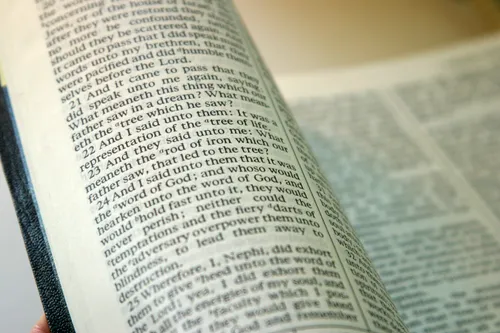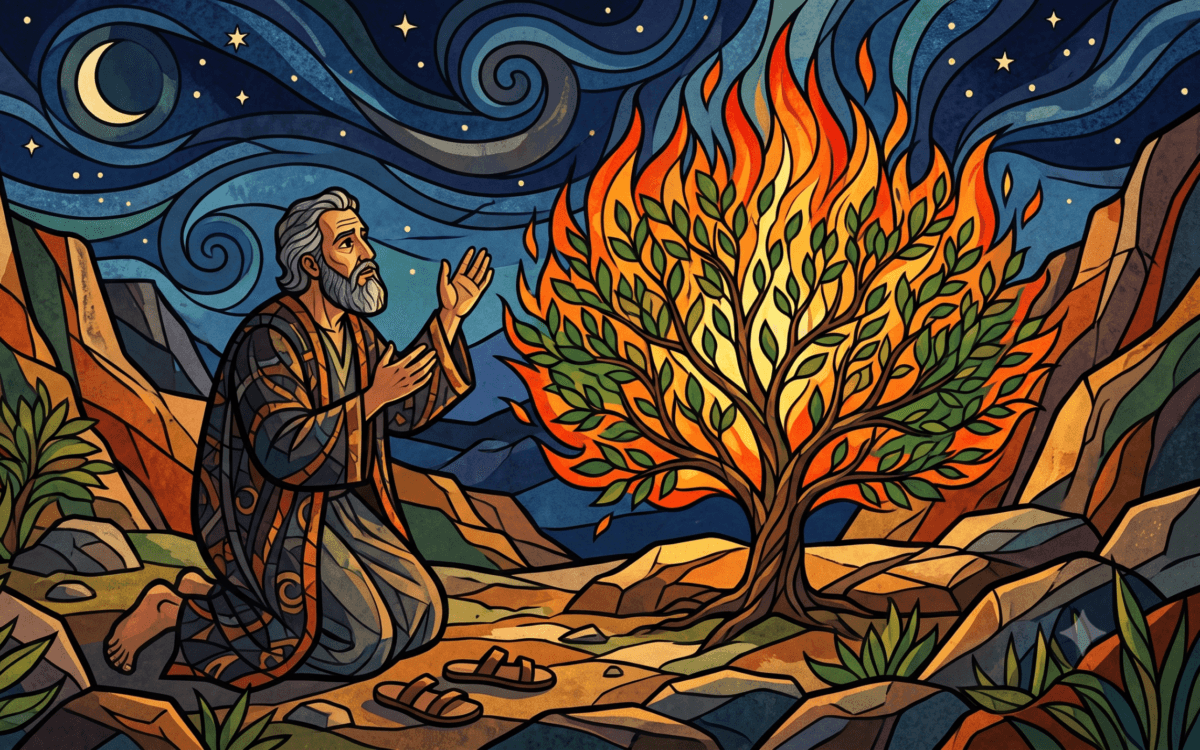
The scriptures contain accounts of God’s dealings with His people. These accounts teach us His gospel, and we gain a greater understanding of the doctrine as we learn the details of the narrative.
Jesus’ parables exemplify the use of narrative to teach doctrine: the pearl of great price,1 the unmerciful servant,2 the laborers in the vineyard,3 the ten virgins,4 the good Samaritan,5 the prodigal son,6 Lazarus and the rich man,7 and many others are stories that teach principles. Just as the Savior’s parables tell stories to teach doctrine, scripture stories demonstrate the application of doctrine.
We can call the narrative many things, like “accounts,” or “stories,” or “history.” But whatever we call them, they are the stories of people, and in the lives of those people, we see what happens when we live, or don’t live, the gospel of Jesus Christ.
Scripture stories are not just for children
I personally think that when we hear the word “story,” we feel like it applies primarily to children. In the Church’s resources to help us understand the scriptures, the word “story” is linked to children.8 There are “Old Testament Stories,”9 “New Testament Stories,”10 “Book of Mormon Stories,”11 and “Doctrine and Covenants Stories.”12 But “stories” are not just for children. We all enjoy and learn from stories:
Storytelling [] helps with learning because stories are easy to remember. Organizational psychologist Peg Neuhauser found that learning which stems from a well-told story is remembered more accurately, and for far longer, than learning derived from facts and figures. Similarly, psychologist Jerome Bruner’s research suggests that facts are 20 times more likely to be remembered if they’re part of a story.13
Educators have long recognized the value of storytelling in teaching:
[N]arrative is a preferred way of learning because students want explanations and patterns. Students make sense of the world and those around them through stories. It is through the sharing of personal stories that many learning benefits can be derived. Storytelling requires active listening. The more actively a student listens, the deeper the bond created. Students can use stories as a way not only to connect with information, but also to recall it later. When a person tells a story, the audience can hear the personal interest and energy in the topic. Stories elicit student attention, giving them something to remember, reconsider, and reconnect with long after the story is shared.14
There is a power in stories, and the scriptures are filled with stories. In my post, “A Personal Approach to Scripture Study: Learning to Love the Scriptures,” I wrote about how I learned to love the stories of the scriptures. Not only do stories make the scriptures more interesting and memorable, but they also help me understand how to live the gospel.
Scripture stories teach us doctrine
The teacher manual for the institute course, “Scripture Study-The Power of the Word,” explains the importance of “using scripture to understand scripture,” “studying scripture in context,” and “bridging the cultural gap,” all of which are accomplished as we strive to understand the narrative. The stories of the scriptures give us the context in which doctrine was taught, and as we learn the culture in which the narrative takes place, we gain much greater insights into the doctrine.
Example: faith
Alma taught that “if ye have faith ye hope for things which are not seen, which are true.”15 Moroni taught that “faith is things which are hoped for and not seen.”16 Paul taught that “faith is the substance of things hoped for, the evidence of things not seen.”17
The abstract18 concept of faith can be difficult to understand just from those descriptions. And so, the prophets who taught these doctrines didn’t just teach faith in the abstract, but also used several stories as examples of faith.
Paul referred to narratives such as the creation, Cain and Abel, Enoch, Noah, Abraham, Sara, Jacob and Esau, Joseph, Moses, Joshua and Jericho, and many others.19 Moroni also gave examples, such as Moses, Alma and Amulek, Nephi and Lehi, Ammon, and others.20
Both Paul and Moroni briefly mention these examples, without giving long explanations of each story. Paul even said, “And what shall I more say? for the time would fail me to tell of Gedeon, and of Barak, and of Samson, and of Jephthae; of David also, and Samuel, and of the prophets.”21 Those simple references, if we know the stories, can bring to mind rich details that help us connect concrete examples to the abstract concept of faith. But if we don’t know those stories, then the names just sound like gibberish.
The narrative of the Old Testament is central to its teachings
Paul and Moroni referred to stories without giving details, and Old Testament prophets do the same thing when discussing their history. Prophets like Isaiah assume that their audience already knows the stories, so they don’t re-tell them; they just reference them to teach principles:
To understand Isaiah one needs also to understand the historical background of the people among whom he ministered. It is valuable to gain an overall view of the exodus of Israel from Egypt and their wanderings in the wilderness, their covenants with God, their conquest of Canaan, the reigns of the judges and the birth of the kingdom of Israel, the golden age of the great King David, and the division of Israel into two kingdoms. One should learn of Israel’s apostasies and the struggle they had with the influence of the nations that surrounded them and by which they were often led from God. Isaiah used numerous concepts and figures of speech that came directly from that history. It is often necessary to be familiar with Israel’s history to see the point that Isaiah was trying to make. It is imperative to view the writings of Isaiah in their proper context, for he often spoke of the conditions of his time and their effect on the Lord’s people.22
The narrative of the Old Testament is often referenced by its prophets, and we won’t understand those teachings unless we know the stories.
How do we learn the stories?
The stories of the scriptures are filled with people. If we want to learn the stories, we need to get to know the people.
Example: the Mulekites
The Book of Mormon begins with the account of Lehi and his family leaving Jerusalem. Lehi’s son, Nephi, wrote the first book of the Book of Mormon, and said, “[I]n the commencement of the first year of the reign of Zedekiah, king of Judah, (my father, Lehi, having dwelt at Jerusalem in all his days); and in that same year there came many prophets, prophesying unto the people that they must repent, or the great city Jerusalem must be destroyed.”23
That same Zedekiah mentioned by Nephi is referenced in 2 Kings 24: “And the king of Babylon made Mattaniah [king], and changed his name to Zedekiah. . . . Zedekiah was twenty and one years old when he began to reign, and he reigned eleven years in Jerusalem. . . . [I]n the ninth year of his reign, . . . Nebuchadnezzar king of Babylon came, he, and all his host, against Jerusalem, . . . And the city was besieged unto the eleventh year of king Zedekiah.”24
In the Book of Mormon account, when King Mosiah (King Benjamin’s father) left the land of Nephi (several hundred years after Lehi and his family left Jerusalem), they traveled in the wilderness until they found the land called Zarahemla.25 In Zarahemla, they found a people who had come “from Jerusalem at the time that Zedekiah, king of Judah, was carried away captive into Babylon.”26
I find this remarkable. Before Lehi left Jerusalem, he prophesied that Jerusalem would be destroyed, and the inhabitants “should be carried away captive into Babylon.”27 Laman and Lemuel criticized these prophecies, not believing that Jerusalem could be destroyed.28 Lehi later testified that Jerusalem had been destroyed, and “had we remained in Jerusalem we should also have perished.”29
Laman and Lemuel likely scoffed at that, wondering how he could possibly know whether Jerusalem had been destroyed. The proof didn’t come during their lifetime, but it came several centuries later when Mosiah and the Nephites encountered the Mulekites in Zarahemla. A later prophet used this as an example to testify of the reality of prophecies: “[W]e know that Jerusalem was destroyed according to the words of Jeremiah. O then why not the Son of God come, according to his prophecy? And now will you dispute that Jerusalem was destroyed? Will ye say that the sons of Zedekiah were not slain, all except it were Mulek? Yea, and do ye not behold that the seed of Zedekiah are with us, and they were driven out of the land of Jerusalem?”30
This powerful testimony demonstrates the reality of prophets and their prophecies. But to fully understand, we need to know the narrative from both the Bible and the Book of Mormon. We can learn the stories as we encounter people in the scriptures and try to learn more about them.
The stories unlock much of what is difficult in the Old Testament
The Old Testament can be confusing, but much of that confusion can be resolved as we learn the stories. The people, places, and events that comprise the history of Israel are often referred to by later prophets. If we don’t know those stories, it sounds like they’re speaking a foreign language. We can “translate” their messages simply by learning the names of people, places, and related events.
Example: Isaiah and the “day of Midian”
As previously mentioned, Isaiah frequently used names as symbols for events. In the midst of a messianic prophecy, Isaiah said, “[T]hou hast broken the yoke of his burden, and the staff of his shoulder, the rod of his oppressor, as in the day of Midian.”31
The “day of Midian” references the story of Gideon. When the Israelites were in bondage to the Midianites, Gideon prayed, “Oh my Lord, if the Lord be with us, why then is all this befallen us? and where be all his miracles which our fathers told us of, saying, Did not the Lord bring us up from Egypt? but now the Lord hath forsaken us, and delivered us into the hands of the Midianites.”32
Gideon gathered an army, but it was too large: “[T]he Lord said unto Gideon, The people that are with thee are too many for me to give the Midianites into their hands, lest Israel vaunt themselves against me, saying, Mine own hand hath saved me.”33 So, the Lord told Gideon to take the army to the water, and “Every one that lappeth of the water with his tongue, as a dog lappeth, him shalt thou set by himself; . . . And the number of them that lapped, putting their hand to their mouth, were three hundred men.”34 With those three hundred men, and with the miraculous help of the Lord, Gideon defeated the Midianites and freed his people.35
Isaiah’s reference to “the day of Midian” is meant to cause us to ponder the miraculous power of God and the deliverance of His people. Within the context of Isaiah’s message, he wants us to remember that it is God who delivers us. We cannot deliver ourselves.
Isaiah and many other Old Testament prophets reference their history. If we want to understand the prophets of the Old Testament, we need to know the stories.
Resources that can help us learn the stories
The scriptures are hard, especially the Old Testament. There are many resources that can help us gain greater insights into the stories of the scriptures.
Bible translations
The official translation of the Bible used by the Church is the King James Version.36 However, the Church has recently identified other translations that are “doctrinally clear and also easier to understand.”37 These include the English Standard Version (ESV), New Revised Standard Version (NRSV), New International Version (NIV), New Living Translation (NLT), New King James Version (NKJV), and New International Reader’s Version (NIrV).38
There are many ways to access these versions, but I like a website called Bible Gateway. It lets you select one verse or chapter, using any of the translations. These translations can be particularly helpful in understanding difficult passages.
Scripture Helps
There are many resources published by the Church that can help us understand the stories:
- Guide to the Scriptures – Names of people and places are briefly described, with scripture references.
- Bible Dictionary – Definitions of words, but also explanations of people and places. More detail, but not as comprehensive as the Guide to the Scriptures.
- Reference Guide to the Holy Bible – Scriptural references for people, places, and events.
- Bible Maps – Locate places and get a better sense of geography and terrain.
- Bible Chronology (includes Chronology of the Old Testament and Chronology of the New Testament) – Timeline of people and significant events.
- Scripture Helps (includes Scripture Helps: Old Testament and Scripture Helps: New Testament) – These are new resources that are intended to be used with the Come, Follow Me program.
Learn the stories
It is vital to understand that “[t]he aim of all gospel learning and teaching is to deepen our conversion and help us become more like Jesus Christ.”39 So the end goal is not to just know the stories. Our study of the scriptures needs to help us come unto Christ.
The stories can help with that objective. By learning more about the stories, we see examples of how to live the doctrines taught in those stories. As we make an effort to learn the stories as part of our scripture study, we can learn more about the doctrine taught in the scriptures.
References
- Matthew 13:44-46. ↩︎
- Matthew 18:21-35. ↩︎
- Matthew 20:1-16. ↩︎
- Matthew 25:1-13. ↩︎
- Luke 10:25-37. ↩︎
- Luke 15:11-32. ↩︎
- Luke 16:19-31. ↩︎
- Scripture Stories – Illustrated for Children, https://www.churchofjesuschrist.org/study/scriptures/scripture-stories?lang=eng. ↩︎
- Old Testament Stories, https://www.churchofjesuschrist.org/study/manual/old-testament-stories-2022?lang=eng. ↩︎
- New Testament Stories, https://www.churchofjesuschrist.org/study/manual/new-testament-scripture-stories?lang=eng. ↩︎
- Book of Mormon Stories, https://www.churchofjesuschrist.org/study/manual/book-of-mormon-stories-2024?lang=eng. ↩︎
- Doctrine and Covenants Stories, https://www.churchofjesuschrist.org/study/manual/doctrine-and-covenants-stories-2025?lang=eng. ↩︎
- Vanessa Boris, “What Makes Storytelling So Effective For Learning,” Harvard Business Impact, https://www.harvardbusiness.org/insight/what-makes-storytelling-so-effective-for-learning/. ↩︎
- Jeanne M. Hughes, Justina Oliveira, and Crystal Bickford, “The Power of Storytelling to Facilitate Human Connection and Learning,” Impact: The Journal of the Center for Interdisciplinary Teaching & Learning, vol. 11, no. 2 (Summer 2022), Boston University, https://sites.bu.edu/impact/previous-issues/impact-summer-2022/the-power-of-storytelling/. ↩︎
- Alma 32:21. ↩︎
- Ether 12:6. ↩︎
- Hebrews 11:1. ↩︎
- Cambridge Dictionary, “abstract ideas,” https://dictionary.cambridge.org/thesaurus/articles/abstract-ideas. ↩︎
- Hebrews 11. ↩︎
- Ether 12. ↩︎
- Hebrews 11:32. ↩︎
- Old Testament Student Manual Kings-Malachi, “Understanding Isaiah,” https://www.churchofjesuschrist.org/study/manual/old-testament-student-manual-kings-malachi/enrichment-e?lang=eng&id=p33#p33. ↩︎
- 1 Nephi 1:4. ↩︎
- 2 Kings 24:17-20. ↩︎
- Omni 1:12-13. ↩︎
- Omni 1:15-16. ↩︎
- 1 Nephi 1:13. ↩︎
- 1 Nephi 2:11-13. ↩︎
- 2 Nephi 1:4. ↩︎
- Helaman 8:20-21. ↩︎
- Isaiah 9:4. ↩︎
- Judges 6:13. ↩︎
- Judges 7:2. ↩︎
- Judges 7:5-6. ↩︎
- Judges 7, Judges 8. ↩︎
- General Handbook, 38.8.41.1. ↩︎
- Ibid. ↩︎
- Scriptures, Translations and Formats, Holy Bible, https://www.churchofjesuschrist.org/study/manual/translations-and-downloads/scriptures/holy-bible?lang=eng&id=p_lsi4a-p_boAPn#p_lsi4a. ↩︎
- Come, Follow Me, “Conversion Is Our Goal,” https://www.churchofjesuschrist.org/study/manual/come-follow-me-for-home-and-church-old-testament-2026/001-conversion?lang=eng&id=p1#p1. ↩︎