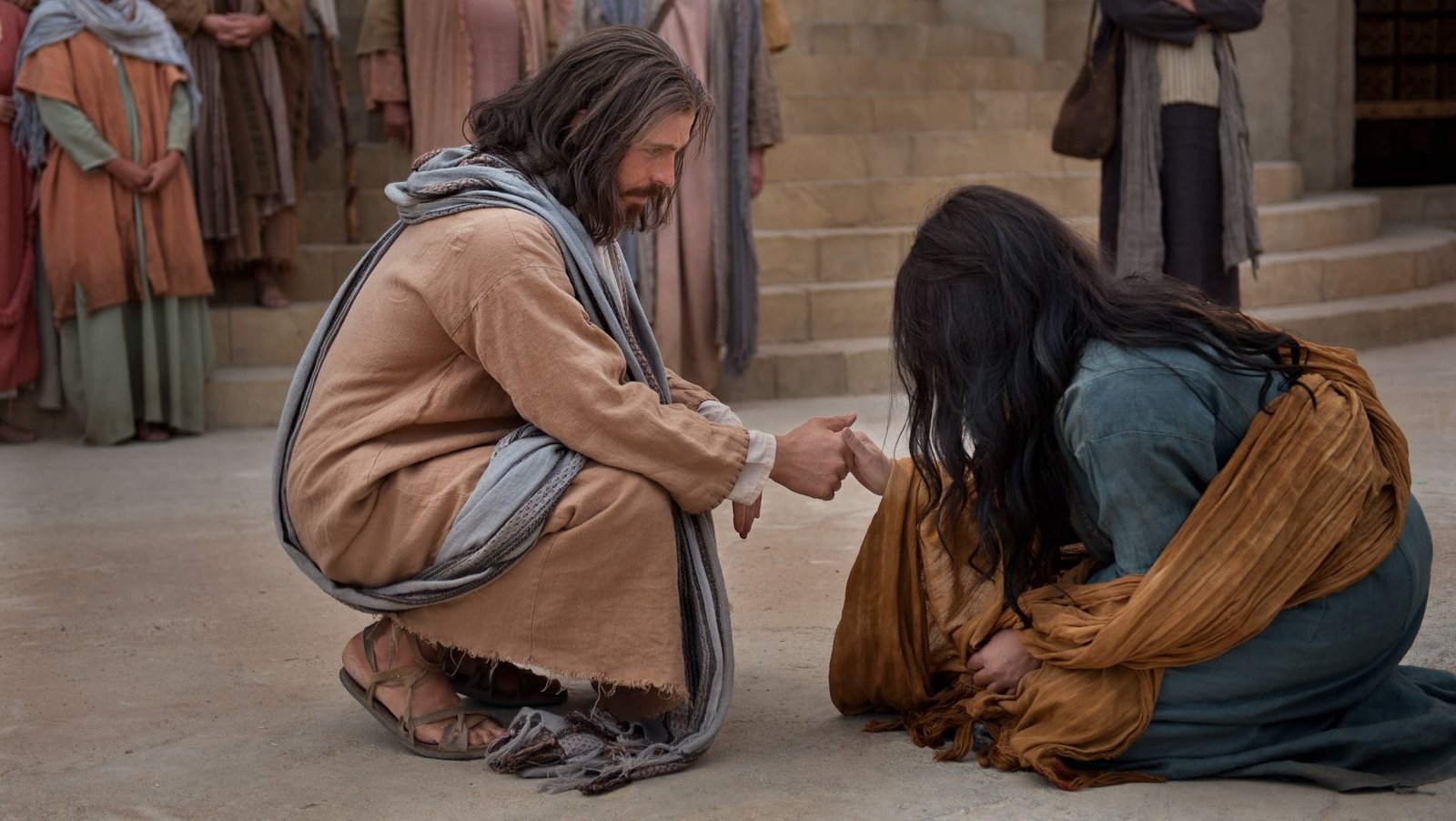
I had a powerful experience reading Hosea: it felt like I was hearing God mourn for a people who had abandoned Him.
I have heard many ask why God seems so much angrier in the Old Testament. We hear modern prophets and apostles teach that God loves us and is in relentless pursuit of us. But the Old Testament can sometimes give the impression of a vengeful God who punishes any misstep. But I am convinced that God is the same yesterday, today, and forever. Why, then, does He seem so different in the Old Testament?
Personally, I think Hosea helps us consider that question from a different perspective. We see the Lord calling out to His people, wanting to protect and comfort them, but mourning when they reject His love.
The setting of Hosea
Hosea was a contemporary of Isaiah.1 Isaiah was called as a prophet in the southern kingdom of Judah, whereas Hosea was called to minister in the northern kingdom of Israel.2 Isaiah prophesied about the invasion of Assyria and the loss of the northern kingdom of Israel, but he did that while living in Jerusalem. Hosea, on the other hand, was living in the northern kingdom during Assyria’s invasion.3 As the prophet for Israel, he described some of the terrors that the people experienced:
Samaria shall become desolate; for she hath rebelled against her God: they shall fall by the sword: their infants shall be dashed in pieces, and their women with child shall be ripped up.4
Hosea’s writings reflect strong emotions, both his own and the Lord’s. His personal anguish gives him a voice to express the Lord’s sorrow over what was happening to His people.
The “whiplash” nature of Hosea’s writings
Like Isaiah, Jeremiah, and Ezekiel, Hosea wrote about the covenant relationship between the Lord and His covenant people.5 However, unlike Isaiah, Jeremiah, and Ezekiel, who often have longer expositional passages describing the covenant, the consequences of breaking the covenant, and the Lord’s eventual gathering of His covenant people, Hosea’s writings do not have the same expositional structure. He moves immediately from broken-hearted betrayal to an almost desperate promise of redemption. Consider the following example:
[Y]e are not my people, and I will not be your God.
Yet the number of the children of Israel shall be as the sand of the sea, which cannot be measured nor numbered; and it shall come to pass, that in the place where it was said unto them, Ye are not my people, there it shall be said unto them, Ye are the sons of the living God.6
That is an immediate emotional swing. In one sentence, the Lord says they are not His people, but in the next sentence He says it will be said, “Ye are the sons of the living God.” There is no discussion of repentance, no talk of returning, no reason given for the change in heart; it’s like He can’t bear the thought of abandoning His people.
His sorrow is compared to a wronged spouse
What analogy could the Lord make to teach His people how much He had been hurt by their abandonment? Hosea uses the example of an unfaithful spouse.
Hosea married Gomer, who was unfaithful to him. Hosea said his wife “hath played the harlot.”7 But even considering the unfaithfulness of his wife, Hosea tries to help her stay with him:
I will hedge up thy way with thorns, and make a wall, that she shall not find her paths. And she shall follow after her lovers, but she shall not overtake them; and she shall seek them, but shall not find them: then shall she say, I will go and return to my first husband; for then was it better with me than now.8
Even as Hosea mourns his wife’s infidelity, he tries to prevent her from going after her love interests by hedging up her way, or building a wall, so that she cannot follow after those other interests.
He then describes a series of judgments against his unfaithful wife:
Therefore will I return, and take away my corn in the time thereof, and my wine in the season thereof, and will recover my wool and my flax given to cover her nakedness.
And now will I discover her lewdness in the sight of her lovers, and none shall deliver her out of mine hand.
I will also cause all her mirth to cease, her feast days, her new moons, and her sabbaths, and all her solemn feasts.
And I will destroy her vines and her fig trees, whereof she hath said, These are my rewards that my lovers have given me: and I will make them a forest, and the beasts of the field shall eat them.9
In these passages, we feel the real and visceral pain of a wronged spouse. However, he immediately expresses his love for her and describes all the ways that he will bless her life:
Therefore, behold, I will allure her, and bring her into the wilderness, and speak comfortably unto her.
And I will give her her vineyards from thence, and the valley of Achor for a door of hope: and she shall sing there, as in the days of her youth, and as in the day when she came up out of the land of Egypt.
And it shall be at that day, saith the Lord, that thou shalt call me Ishi; and shalt call me no more Baali.
For I will take away the names of Baalim out of her mouth, and they shall no more be remembered by their name.10
There is no transition between the pronouncement of judgment and the promised mercy. It shows the two emotions existing simultaneously: he’s heartbroken that she’s been unfaithful, but he loves her so much he wants her to return and be with him. Because those feelings both exist at the same time, when he expresses them both together, it feels like emotional whiplash.
Applying the analogy to the covenant relationship reveals the Lord’s sorrow
While sharing the analogy, Hosea clearly applies it to demonstrate how the Lord feels about Israel’s abandonment of the covenant relationship:
I will visit upon her the days of Baalim, wherein she burned incense to them, and she decked herself with her earrings and her jewels, and she went after her lovers, and forgat me, saith the Lord.11
Clearly, the unfaithfulness occurred when Israel worshipped idols and false gods, forgetting their covenant relationship with the Lord.
But despite Israel’s unfaithfulness, the Lord does everything He can to help His people return.
First, He will “hedge up thy way with thorns, and make a wall,” making it more challenging for Israel to “follow after her lovers,” or turn to the false gods.12 Despite their desire to turn away from Him, He does not easily let them go.
Next, as He describes what He will do to encourage Israel to turn to Him, He uses the conjunctive adverb “therefore,” which seems basic, but in this context is remarkable. Normally, the word “therefore” comes between a behavior and the consequences that flow from that behavior. But in this case, the word “therefore” connects the Lord’s pronouncement of judgment with His desire to “allure” (entice, flatter, or persuade)13 His people and the blessings He wants to bestow on them. This helps us see that His love is the basis for both the judgment and the mercy, and that everything He does is to help them thrive within the covenant relationship.
The emotional heart of the whole book
There is one particular verse in Hosea that stood out to me and gave me one of the more profound experiences I’ve had while reading the Old Testament:
And it shall be at that day, saith the Lord, that thou shalt call me Ishi; and shalt call me no more Baali.14
The meaning becomes clearer when reading from the New International Version:
“In that day,” declares the Lord,
“you will call me ‘my husband’;
you will no longer call me ‘my master.'”15
There was something about this verse that made me feel the Lord’s anguish at the betrayal of His people. He wants them to obey Him, but much more importantly (and perhaps at the heart of the reason for the obedience), He wants a relationship with them.
He doesn’t want His commandments to be merely transactional. He wants His people to feel about Him the way He feels about them.
The difference between “husband” and “master”
Of course, when we apply that analogy in today’s society, we see the clear distinction. It is offensive to even think about a marriage relationship in which the wife feels like she needs to call her husband “master” or simply be obedient. But I think that we often feel that way about our relationship with the Lord; it can feel like He is distant and simply demands our obedience. Certainly, we call the Savior “Lord and Master,” and He approves of that title.16 However, in this context, the Lord is expressing a desire for a relationship that is deeper than mere obedience.
Isaiah taught that the performance of their ordinances had become simply outward, and they did not feel close to the Lord.
- “To what purpose is the multitude of your sacrifices unto me? saith the Lord: I am full of the burnt offerings of rams, and the fat of fed beasts; and I delight not in the blood of bullocks, or of lambs, or of he goats. . . . If ye be willing and obedient, ye shall eat the good of the land.” Isaiah 1:11-19.
- “[T]his people draw near me with their mouth, and with their lips do honour me, but have removed their heart far from me, and their fear toward me is taught by the precept of men.” Isaiah 29:13.
- “But thou hast not called upon me, O Jacob; but thou hast been weary of me, O Israel.” Isaiah 43:22.
Jeremiah also used the marriage relationship as an analogy and called Ephraim (or the nation of Israel) a wayward son:
- “I remember thee, the kindness of thy youth, the love of thine espousals, when thou wentest after me in the wilderness, in a land that was not sown.” Jeremiah 2:2.
- “Is Ephraim my dear son? is he a pleasant child? for since I spake against him, I do earnestly remember him still: therefore my bowels are troubled for him; I will surely have mercy upon him, saith the Lord.” Jeremiah 31:20.
Ezekiel makes this sentiment even clearer. The Lord doesn’t try to snare us with obscure rules and He takes no delight in the punishment of the wicked:
- “Have I any pleasure at all that the wicked should die? saith the Lord God: and not that he should return from his ways, and live?” Ezekiel 18:23.
- “For I have no pleasure in the death of him that dieth, saith the Lord God: wherefore turn yourselves, and live ye.” Ezekiel 18:32.
- “As I live, saith the Lord God, I have no pleasure in the death of the wicked; but that the wicked turn from his way and live: turn ye, turn ye from your evil ways; for why will ye die, O house of Israel?” Ezekiel 33:11.
These scriptures show how much the Lord wants us to look beyond the outward, transactional ordinances. He wants us to see the purpose for them and use them to draw closer to Him. We don’t participate in ordinances merely for the sake of performing ordinances. All the ordinances of the gospel are designed to help us see the power of God and continually turn to Him. As we read Isaiah, Jeremiah, Ezekiel, and Hosea, we learn that the Israelites performed the outward ordinances but they lacked the inner commitment to the Lord that would have preserved and developed a relationship with Him.
And so, the imagery of the Lord wanting to be more than just a master is powerful. He wants to have a personal, meaningful relationship with us.
How can we develop this type of relationship?
There is a line in the current temple recommend interview that I think summarizes the problem framed by these prophets. It states: “When you put on your garment, you put on a sacred symbol of Jesus Christ. Wearing it is an outward expression of your inner commitment to follow Him.”17
An outward expression of an inner commitment. I think the Israelites’ problem could be summarized by saying they were performing the outward ordinances, but they lacked the inner commitment. So, Ezekiel frequently taught about the importance of having a “new heart”:
And I will give them one heart, and I will put a new spirit within you; and I will take the stony heart out of their flesh, and will give them an heart of flesh:
That they may walk in my statutes, and keep mine ordinances, and do them: and they shall be my people, and I will be their God.18
Throughout the book of Ezekiel, we see the need for an inner commitment to the Lord, and we better understand the essential nature of the covenant relationship: “they shall be my people, and I will be their God.” That sentiment moves us beyond a transactional understanding of our covenants. Once we seek to develop a relationship with the Lord, we see our covenants and the ordinances of the gospel in an entirely new light. We learn how those outward performances can help us develop and strengthen the inner commitment.
How do we develop that new heart? Jeremiah had some insight into what we can do:
Then shall ye call upon me, and ye shall go and pray unto me, and I will hearken unto you.
And ye shall seek me, and find me, when ye shall search for me with all your heart.19
In order to develop a relationship with the Lord, we need to “search for [Him] with all [our] heart.” He needs to have a place of importance in our lives. And so the daily acts of devotion, like prayer and scripture study, become not just “transactional” but acts of worship that help us develop our relationship with the Savior.
Let the Lord heal you
A recent teaching by Elder Patrick Kearon has been quoted often: “God is in relentless pursuit of you. He ‘wants all of His children to choose to return to Him,’ and He employs every possible measure to bring you back.”20 This, to me, seems to be the message of Hosea. As Hosea witnessed Israel being invaded, captured, and driven away, he testified of the Lord’s ultimate love and the blessings that could be ours if we return to Him:
O Israel, return unto the Lord thy God; for thou hast fallen by thine iniquity.
Take with you words, and turn to the Lord: say unto him, Take away all iniquity, and receive us graciously: so will we render the calves of our lips.
I will heal their backsliding, I will love them freely.21
Hosea has helped me better understand that the Lord longs to have a relationship with us. Our covenants with Him are not simply a list of tasks for us to perform; they give us the opportunity to come unto the Lord and receive His mercy and grace. Yes, we have outward ordinances and practices that are part of our worship, but they have a deeper purpose:
For I desired mercy, and not sacrifice; and the knowledge of God more than burnt offerings.22
Without the inner commitment, our outward expressions are empty. As we make a consistent, intentional effort to seek the Lord in our daily activities, as we spend time daily in prayer and scripture study, and as we frequently attend the temple, we will develop that relationship with the Lord. We will be able to say to the Lord, “thou art my God,” and He will say to us, “thou art my people.”23
References
- Compare Hosea 1:1 with Isaiah 1:1. Their ministries both lasted during the “days of Uzziah, Jotham, Ahaz, and Hezekiah, kings of Judah.” ↩︎
- Compare Hosea 1:1, specifically referring to the “days of Jeroboam the son of Joash, king of Israel,” with Isaiah 1:1, referring to “Judah and Jerusalem.” ↩︎
- For more information about the Assyrian invasion and the loss of the ten tribes, see my prior posts: “How is Isaiah Organized,” “Understanding Isaiah, Part 1,” or “Understanding Isaiah Part 2.” ↩︎
- Hosea 13:16. ↩︎
- For a comparison of Isaiah, Jeremiah, and Ezekiel, see my prior post “God Keeps His Covenants Even When We Don’t.” ↩︎
- Hosea 1:9-10. ↩︎
- Hosea 2:5. ↩︎
- Hosea 2:6-7. ↩︎
- Hosea 2:9-13. ↩︎
- Hosea 2:14-23. ↩︎
- Hosea 2:13. ↩︎
- Hosea 2:6. ↩︎
- “H6601 – pāṯâ – Strong’s Hebrew Lexicon (KJV).” Blue Letter Bible. Accessed 20 Nov, 2026. https://www.blueletterbible.org/lexicon/h6601/kjv/wlc/0-1/. ↩︎
- Hosea 2:16. ↩︎
- Hosea 2:16, New International Version. ↩︎
- John 13:13-14. ↩︎
- General Handbook, 26.4.2, https://www.churchofjesuschrist.org/study/manual/general-handbook/26-temple-recommends?lang=eng&id=p113#p113. ↩︎
- Ezekiel 11:19-20. ↩︎
- Jeremiah 29:12-13. ↩︎
- Patrick Kearon, “God’s Intent Is to Bring You Home,” April 2024, https://www.churchofjesuschrist.org/study/general-conference/2024/04/45kearon?lang=eng&id=p5#p5. ↩︎
- Hosea 14:1-4. ↩︎
- Hosea 6:6. ↩︎
- Hosea 2:23. ↩︎
