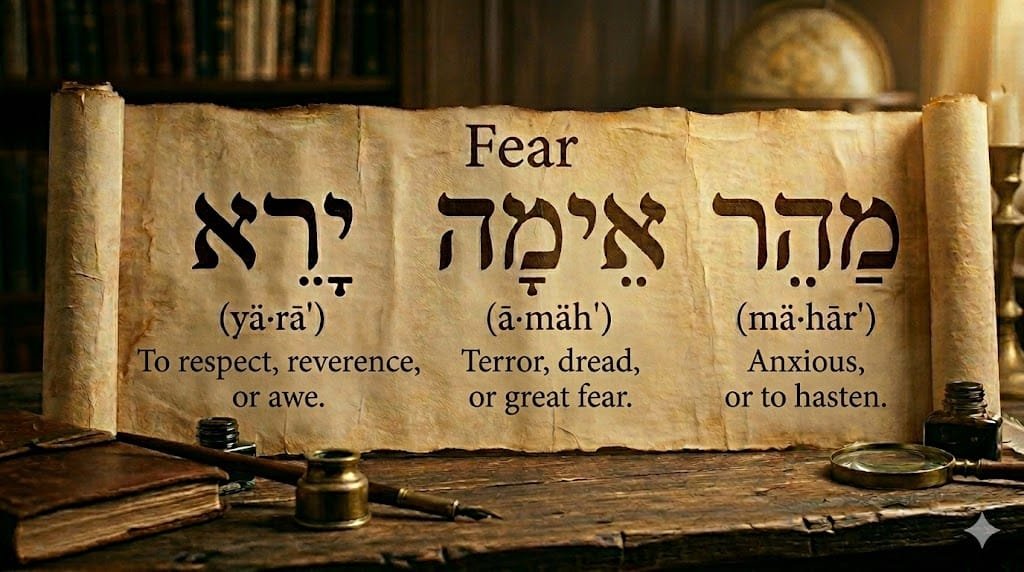
What does it mean to “fear God,” or “fear the Lord”? These phrases appear dozens of times in the Old Testament. It almost sounds like we are supposed to be afraid of God. But is that really what it means?
I’ve talked with a lot of people about the Old Testament. One common struggle is the perception that God seems severe, angry, violent, and distant from His people. Scriptures that tell us to “fear the Lord” don’t help with that perception. However, as we study these phrases, we learn that in the Old Testament, “fearing the Lord” most often means revering and honoring God—not being afraid of Him.
God is “the same yesterday, today, and forever.”1 The Savior told Nicodemus that God “gave his only begotten Son” because He “loved the world.”2 God’s love is “infinite and it will endure forever.”3 That was true in the pre-existence, during Old Testament times, New Testament times, and today. So the phrase “fear God,” or “fear the Lord,” simply can’t mean to be afraid of Him.
We can better understand what it means to “fear the Lord” as we research the meaning of the word “fear” in the original Hebrew manuscripts, and as we study the scriptures and the words of the prophets and apostles.
How did we get the Old Testament?
A study of words using the original Hebrew must begin with a brief understanding of how we got the Old Testament:
The books of the Old Testament were likely originally written on material such as animal skin or papyrus. These were transcribed and preserved as scrolls, written mostly in Hebrew. Ancient manuscripts were eventually compiled into one collection that came to be known as the Hebrew Bible. . . . There are no surviving original manuscripts written by the authors of the Old Testament. The oldest existing manuscripts of Old Testament texts date back to the third century BC.4
The oldest manuscripts of the Old Testament are written in Hebrew.5 It is well-documented that Joseph Smith studied Hebrew, even hiring a teacher. “Joseph seemed to believe, along with many of his contemporaries, that biblical, classical, and other languages possessed keys for unlocking the earliest divine truths revealed to humanity.”6 But an understanding of Hebrew will not teach us nearly as much as revelation through the Holy Ghost.
Translation and revelation
It is important to understand the difference, or the relationship, between translation and revelation.
The typical definition of “translate” is “to change words into a different language.”7 We often say that Joseph Smith “translated” the Book of Mormon.8 However, “he had no understanding of reformed Egyptian—no one did—yet he successfully dictated a remarkably coherent and inspiring text.”9 Joseph said that he translated the Book of Mormon “by the gift and power of God.”10 In that sense, Joseph Smith’s “translation” of the Book of Mormon was unique. It was more “revelation” than it was “changing words into a different language.”
When we try to understand what Hebrew words mean in English, we typically talk about the “translation” of those words. However, the Bible is the word of God, and so it is vital to seek revelation to gain understanding. Looking at the different meanings of words in different languages is only “the beginning of wisdom.”11 To truly understand the scriptures, we must receive revelation and gain knowledge through the Holy Ghost.12
It is significant that work and “study” are prerequisites to revelation.13 As we explore the meaning of words in the Old Testament, we must seek the guidance of the Spirit to ensure that our thoughts and intentions are guided by the Holy Ghost. As we make that effort, I believe that the Lord will inspire us with a greater understanding of the scripture.
How can we better understand the meaning of the word “fear” in the Old Testament?
I don’t know Hebrew, so I can’t study the original manuscripts. But there are several tools to help guide our research. Two of these tools are Strong’s Exhaustive Concordance of the Bible (“Strong”) and the Brown-Driver-Briggs Hebrew Lexicon (“BDB”).
A concordance is essentially a list of words used in a book,14 whereas a lexicon is essentially a dictionary.15 For the Bible, “Lexicons can be helpful for tracking the meaning, history, and usage of certain words. They are often based upon the original languages of the Bible and require a little knowledge of the language to use. Concordances are helpful for finding other places a word has been used in the Bible.”16
A great tool to access both a concordance and a lexicon of the Bible is blueletterbible.org. That resource can help us find all instances of the word “fear” in the Bible, all the Hebrew words that were translated into “fear” in English, and the meaning of those Hebrew words.
An example: “saber” and “conocer”
If you have read this far (despite the potentially boring nature of this subject), you might be wondering what in the world I’m talking about. A simple example is found in Spanish with the words saber and conocer. The word saber means to know a fact or information. By contrast, the word conocer means to be familiar with or acquainted with people or ideas. Both words are translated into English as know, but their Spanish meanings are distinct. The meaning of those words in Spanish is clear, but when we use the word know in English, we have to interpret its meaning based on the context.
In a similar way, the word “fear” appears in our English Old Testament, but that word is translated from many different Hebrew words. A brief exploration of those various words can help us have a greater understanding of what it means to “fear” the Lord.
Hebrew words translated to “fear”
Using Blue Letter Bible and the Strong concordance, the word “fear” appears 316 times in 307 verses in the King James Version of the Old Testament.17 Amazingly, there are 25 Hebrew words that are translated to “fear” in English:
| Old Testament (Hebrew) for “fear”18 | ||||
|---|---|---|---|---|
| Strongs # | Hebrew | Transliterated | Speech | KJV Equivalent |
| H367 | אֵימָה | ‘êmâ | noun | terror(s), fear, terrible, dread, horror, idols |
| H1481 | גּוּר | gûr | verb | sojourn, dwell, afraid, stranger, gather together, fear, abide, assemble, stand in awe, gathered, inhabitant, remain, sojourners, surely |
| H1674 | דְּאָגָה | dᵊ’āḡâ | noun | carefulness, fear, heaviness, sorrow, with care |
| H1763 | דְּחַל | dᵊḥal | verb | fear, dreadful, terrible, afraid |
| H2731 | חֲרָדָה | ḥărāḏâ | noun | trembling, fear, exceedingly, care, quaking |
| H2844 | חַת | ḥaṯ | noun | dread, broken, fear, dismayed |
| H2849 | חַתְחַת | ḥaṯḥaṯ | noun | fear |
| H3016 | יָגוֹר | yāḡôr | adjective | fear, afraid |
| H3025 | יָגֹר | yāḡōr | verb | afraid, fear |
| H3372 | יָרֵא | yārē’ | verb | fear, afraid, terrible, terrible thing, dreadful, reverence, fearful, terrible acts, misc |
| H3373 | יָרֵא | yārē’ | adjective | fear, afraid, fearful |
| H3374 | יִרְאָה | yir’â | noun | fear, exceedingly, dreadful, fearfulness |
| H4032 | מָגוֹר | māḡôr | noun | fear, terror |
| H4034 | מְגוֹרָה | mᵊḡôrâ | noun | fear |
| H4035 | מְגוּרָה | mᵊḡûrâ | noun | fear, barn |
| H4116 | מָהַר | māhar | verb | haste, swift, quickly, hastily, hasty, soon, speed, headlong, rash, fearful, ready, shortly, speedily, straightway, suddenly |
| H4172 | מוֹרָא | môrā’ | noun | fear, terror, dread, terribleness |
| H6206 | עָרַץ | ʿāraṣ | verb | afraid, fear, dread, terribly, break, affrighted, oppress, prevail, terrified |
| H6342 | פָּחַד | pāḥaḏ | verb | fear, afraid, awe, shake |
| H6343 | פַּחַד | paḥaḏ | noun | fear, dread, great, terror, dreadful, greatly |
| H6345 | פַּחְדָּה | paḥdâ | noun | fear |
| H6427 | פַּלָּצוּת | pallāṣûṯ | noun | horror, trembling, fearfulness |
| H7267 | רֹגֶז | rōḡez | noun | trouble, troubling, noise, rage, fear, wrath |
| H7374 | רֶטֶט | reṭeṭ | noun | fear |
| H7461 | רַעַד | raʿaḏ | noun | trembling, fear, fearfulness |
This tells us that there are meanings, or nuances, that are naturally found in Hebrew that we have to try to understand in English just from the context. The many Hebrew words and the variety of meanings, show why it can be hard to understand the word “fear.”
An example of three of these words helps us to see the variety of meanings from the original Hebrew.
Reverence, Honor
Genesis 42:18 says, “And Joseph said unto them the third day, This do, and live; for I fear God.”
Searching that verse on blueletterbible.org, we see that the word “fear” used in that verse is numbered as “H3372” in Strong’s concordance (or “Strong’s H3372”). The “transliteration,” or English spelling to help us know how it sounds in Hebrew, is “yārē’.”
On that same page, there is a reference to the BDB lexicon, which lists the various ways this word is used throughout the Old Testament. In Genesis 42:18, “yārē’” means “reverence, honour, e.g. parents.” The word in this setting clearly does not mean to be afraid. The fact that it means “reverence” or “honor,” and uses parents as the example, means we should treat God as a parent: with reverence and honor. In this context, to “fear God” means to revere and honor Him.
Terror, Dread
Another Hebrew word translated to “fear” is Strong’s H367, transliterated “‘êmâ,” which most often means “terror.” In Exodus 15, the children of Israel rejoice at their salvation from Egypt, and anticipate their conquest of the promised land: “Then the dukes of Edom shall be amazed; the mighty men of Moab, trembling shall take hold upon them; all the inhabitants of Canaan shall melt away. Fear and dread shall fall upon them; by the greatness of thine arm they shall be as still as a stone.” (Exodus 15:15-16).
Using Strong and BDB as previously described, the word “fear” in verse 16 means, “terror, dread.”19 Although the word “fear” in English is used in this verse and in Genesis 42:18, the meanings of the Hebrew words are very different.
Anxious, Disturbed
Another example is from Isaiah 35:4: “Say to them that are of a fearful heart, Be strong, fear not: behold, your God will come with vengeance, even God with a recompence; he will come and save you.” This verse has two uses of the word “fear,” and they are both different words in Hebrew.
The first use, “fearful heart,” is Strong’s H4116, which transliterates to “māhar,” and means “be hurried, anxious, disturbed.”20 This meaning is fascinating to me, because it sounds like in this context, a “fearful heart” means someone who is ready to give up, or is ready to run away. So, we are to encourage those who are not scared, but are ready to give up.
The verse before this is well-known: “Strengthen ye the weak hands, and confirm the feeble knees.”21 The Hebrew meaning of “māhar” gives us a clearer picture of who has “weak hands” or “feeble knees.” They are anxious, or worried, and are struggling to maintain their faith. This is quite different from the meanings of yārē or êmâ.
The second use of “fear” is yārē, or Strong’s H3372, the same word used in Genesis 42:18. However, according to the BDB lexicon, it has a different meaning in this context: “fear, be afraid.”22 So even though it’s the same word, there is something about the Hebrew language that gives it a different meaning in a different context.
The two different Hebrew words in Isaiah 35:4, despite the fact that they’re both translated into English as “fear,” give quite different meanings in this verse. The Lord wants us to strengthen those who have an “anxious” or “disturbed” heart, and He wants us to help them to not be afraid.
These are only three examples, but knowing that the word “fear” is translated from so many different Hebrew words can help us understand why it seems to have so many different meanings.
“One eternal round”
As we try to understand the meaning of words in the scriptures, we can look to the original manuscripts, but even more important is looking to gospel teachings in their totality: “For God doth not walk in crooked paths, neither doth he turn to the right hand nor to the left, neither doth he vary from that which he hath said, therefore his paths are straight, and his course is one eternal round.”23
The scriptures and the teachings of the prophets and apostles are consistent, and have been constant from the foundation of the world. So as we try to understand what it means to “fear” God, we should look to the teachings of prophets and apostles:
- “For God hath not given us the spirit of fear; but of power, and of love, and of a sound mind.” (2 Timothy 1:7).
- “When I speak of having confidence before God, I am referring to having confidence in approaching God right now! I am referring to praying with confidence that Heavenly Father hears us, that He understands our needs better than we do. I am referring to having confidence that He loves us more than we can comprehend, that He sends angels to be with us and with those we love. I am referring to having confidence that He yearns to help each of us reach our highest potential.” Russell M. Nelson, “Confidence in the Presence of God,” April 2025.
- “Fear can have two meanings: (1) to fear God is to feel reverence and awe for Him and to obey His commandments; (2) to fear man, mortal dangers, pain, and evil is to be afraid of such things and to dread them.” Guide to the Scriptures, “Fear.”
- “We must remember that reverence is not a somber, temporary behavior that we adopt on Sunday. True reverence involves happiness, as well as love, respect, gratitude, and godly fear. It is a virtue that should be part of our way of life.” Teachings of Presidents of the Church: Spencer W. Kimball, “Chapter 15: We Should Be a Reverent People.”
- “Different from but related to the fears we often experience is what the scriptures describe as ‘godly fear’ (Hebrews 12:28) or ‘the fear of the Lord’ (Job 28:28; Proverbs 16:6; Isaiah 11:2–3). Unlike worldly fear that creates alarm and anxiety, godly fear is a source of peace, assurance, and confidence.” David A. Bednar, “Therefore They Hushed Their Fears,” April 2015.
The teachings contained in the scriptures and from the prophets and apostles confirm that our Father in Heaven doesn’t want us to be afraid of Him. He is approachable, He wants us to follow Him, learn from Him, trust Him, and exercise faith in Jesus Christ so that we can come unto Him.
The beginning of wisdom
“The fear of the Lord is the beginning of knowledge: but fools despise wisdom and instruction.”24 “The fear of the Lord is the beginning of wisdom: and the knowledge of the holy is understanding.”25
The fear of the Lord is the beginning of knowledge and wisdom. King Benjamin taught that we should trust that God knows more than we do: “Believe in God; believe that he is, and that he created all things, both in heaven and in earth; believe that he has all wisdom, and all power, both in heaven and in earth; believe that man doth not comprehend all the things which the Lord can comprehend.”26
If we hope to obtain knowledge from God, we must humble ourselves to be willing to receive that knowledge, especially if it is different from what we think. If we are going to believe in God, if we are going to believe that we don’t comprehend the things that the Lord can comprehend, we must honor and revere God. We have to give Him our devotion. We have to have godly fear.
“Fear” means many different things in the Old Testament. But our Father in Heaven does not want us to be afraid of Him. As we honor and revere God, and as we give Him our devotion, we will have the humility to believe and trust Him.
References
- 1 Nephi 10:18. ↩︎
- John 3:16. ↩︎
- D. Todd Christofferson, “Abide in My Love,” October 2016, https://www.churchofjesuschrist.org/study/general-conference/2016/10/abide-in-my-love?lang=eng&id=p4#p4. ↩︎
- Scripture Helps: Old Testament, “Welcome to the Old Testament,” https://www.churchofjesuschrist.org/study/manual/scripture-helps-old-testament/000-intro/002-welcome?lang=eng&id=p_qkGb7#p_qkGb7. ↩︎
- Scripture Helps: New Testament, “Studying the New Testament,” n.3, https://www.churchofjesuschrist.org/study/manual/scripture-helps-new-testament/00-intro/002-studying-the-new-testament?lang=eng&id=p4#p4. ↩︎
- Matthew J. Grey, “’The Word of the Lord in the Original’: Joseph Smith’s Study of Hebrew in Kirtland,” in Approaching Antiquity: Joseph Smith and the Ancient World, edited by Lincoln H. Blumell, Matthew J. Grey, and Andrew H. Hedges (Provo, UT: Religious Studies Center; Salt Lake City: Deseret Book, 2015), 249–302, https://rsc.byu.edu/approaching-antiquity-joseph-smith-ancient-world/word-lord-original-joseph-smiths-study-hebrew-kirtland. ↩︎
- Cambridge Dictionary, “translate,” https://dictionary.cambridge.org/us/dictionary/english/translate. ↩︎
- Title Page of the Book of Mormon. ↩︎
- Alexander L. Baugh, “Joseph Smith: Seer, Translator, Revelator, and Prophet,” BYU Speeches, June 24, 2014, https://speeches.byu.edu/talks/alexander-l-baugh/joseph-smith-seer-translator-revelator-prophet/. ↩︎
- Teachings of Presidents of the Church: Joseph Smith, “Chapter 4: The Book of Mormon: Keystone of Our Religion,” 60, https://www.churchofjesuschrist.org/study/manual/teachings-joseph-smith/chapter-4?lang=eng&id=p8#p8. ↩︎
- Psalm 111:10. ↩︎
- Joseph Smith-History 1:73-74, “We were filled with the Holy Ghost . . . . Our minds being now enlightened, we began to have the scriptures laid open to our understandings, and the true meaning and intention of their more mysterious passages revealed unto us in a manner which we never could attain to previously, nor ever before had thought of.” ↩︎
- Doctrine and Covenants 9:7-9. ↩︎
- Cambridge Dictionary, “concordance,” https://dictionary.cambridge.org/dictionary/english/concordance. ↩︎
- Cambridge Dictionary, “lexicon,” https://dictionary.cambridge.org/dictionary/english/lexicon. ↩︎
- The Styberg Library, “Conducting Biblical Exegesis: Lexicons & Concordances,” https://guides.garrett.edu/exegesis/lexicons-concordances. ↩︎
- “KJV Search Results for “fear”.” Blue Letter Bible. Accessed 3 Apr, 2026. https://www.blueletterbible.org//search/search.cfm?Criteria=fear&t=KJV#s=s_primary_0_1. ↩︎
- “KJV Search Results for “fear”.” Blue Letter Bible. Accessed 3 Apr, 2026. https://www.blueletterbible.org//search/search.cfm?Criteria=fear&t=KJV#s=s_primary_0_1. ↩︎
- “H367 – ‘êmâ – Strong’s Hebrew Lexicon (KJV).” Blue Letter Bible. Accessed 3 Apr, 2026. https://www.blueletterbible.org/lexicon/h367/kjv/wlc/0-1/. ↩︎
- “H4116 – māhar – Strong’s Hebrew Lexicon (KJV).” Blue Letter Bible. Accessed 3 Apr, 2026. https://www.blueletterbible.org/lexicon/h4116/kjv/wlc/0-1/. ↩︎
- Isaiah 35:3. ↩︎
- “H3372 – yārē’ – Strong’s Hebrew Lexicon (KJV).” Blue Letter Bible. Accessed 3 Apr, 2026. https://www.blueletterbible.org/lexicon/h3372/kjv/wlc/0-1/. ↩︎
- Doctrine and Covenants 3:2. ↩︎
- Proverbs 1:7. ↩︎
- Proverbs 9:10. ↩︎
- Mosiah 4:9. ↩︎