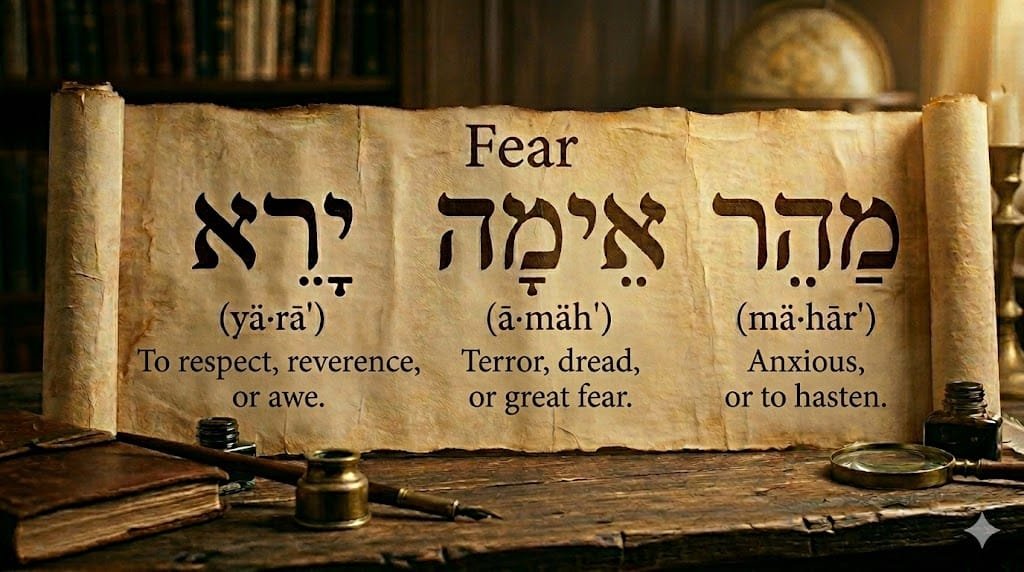
Before Samuel was called as a prophet in Israel, “[T]he word of the Lord was precious in those days; there was no open vision.”1 From the context, the word precious clearly means rare. But the Hebrew word translated into English as precious in 1 Samuel 3 can mean rare or valuable, depending on the context.
So, which meaning applies in your life? Is the word of the Lord precious in your life because it is rare, or is it precious because it is valuable to you?
It requires effort to make the word of the Lord valuable. But if we will make that effort, we will know how to develop and maintain a relationship with Jesus Christ and live as His disciples.
Because of the Israelites’ rebellion, the word of the Lord was rare
By the time the book of 1 Samuel begins, the people of Israel had been embroiled in generations of idol worship.
They rebelled during Moses’ ministry
After the Israelites left Egypt, while Moses was in “the mount of God,”2 they said to Aaron, “Up, make us gods, which shall go before us; for as for this Moses, the man that brought us up out of the land of Egypt, we wot not what is become of him.”3 As a result, Aaron made the golden calf.4
It is significant that many of the ten commandments relate to Israel’s worship of false gods: “Thou shalt have no other gods before me, . . . Thou shalt not make unto thee any graven image, . . . Thou shalt not take the name of the Lord thy God in vain.”5
Despite these commandments, and despite Moses’ continued efforts, the Israelites had a tendency to turn to false gods. At the end of Moses’ life, he said, “For I know thy rebellion, and thy stiff neck: behold, while I am yet alive with you this day, ye have been rebellious against the Lord; and how much more after my death? . . . For I know that after my death ye will utterly corrupt yourselves, and turn aside from the way which I have commanded you.”6
Joshua prophesied of their rebellion
After Moses was “taken up by the Spirit, or buried by the hand of the Lord,”7 Joshua was called by the Lord to lead the people.8 It seems that during Joshua’s leadership, their wars and trials kept them faithful to the Lord. However, Joshua knew their hearts, and during his last message to them, he said:
Now therefore fear the Lord, and serve him in sincerity and in truth: and put away the gods which your fathers served on the other side of the flood, and in Egypt; and serve ye the Lord.
And if it seem evil unto you to serve the Lord, choose you this day whom ye will serve; whether the gods which your fathers served that were on the other side of the flood, or the gods of the Amorites, in whose land ye dwell: but as for me and my house, we will serve the Lord. . . .
Now therefore put away, said he, the strange gods which are among you, and incline your heart unto the Lord God of Israel.9
Despite this admonition, Joshua prophesied that the Israelites would transgress the covenant of the Lord, and would serve other gods.10
They rebelled often during the time of the Judges
In the book of Judges, we read about Israel’s continual departure from serving the Lord. The following introductory verses in the book of Judges give us a pattern that replays itself over and over:
[T]he Lord raised up judges, which delivered them out of the hand of those that spoiled them.
And yet they would not hearken unto their judges, but they went a whoring after other gods, and bowed themselves unto them . . . .
And when the Lord raised them up judges, then the Lord was with the judge, and delivered them out of the hand of their enemies all the days of the judge.
And it came to pass, when the judge was dead, that they returned, and corrupted themselves more than their fathers, in following other gods to serve them, and to bow down unto them; they ceased not from their own doings, nor from their stubborn way.11
It should be noted that the judges were not prophets; they were more like military leaders. Although many of them were righteous, they didn’t teach the word of the Lord like a prophet. And because the people didn’t have consistent leadership, “every man did that which was right in his own eyes.”12
Time periods in the Bible, especially before Solomon, are not precise, but it is estimated that the time of the Judges lasted about 400 years.13 Four hundred years without a prophet to guide them. Four hundred years without the word of the Lord. By the time Samuel was called, generations had passed in which the word of the Lord was not valued, so it had become rare.
What does “precious” mean?
How do we know when precious means valuable or rare? We can better understand this word by looking at its meaning in English, Hebrew, and the teachings of prophets and apostles.
The definition of “precious” in English
The Cambridge Dictionary defines precious as “of great value because of being rare, expensive, or important.”14 When something is precious, it has great value. However, that value can be caused by different reasons. Rarity can increase something’s value, but value can also exist inherently.
When Nephi experienced his vision of the tree of life, he said, “I behold thou hast shown unto me the tree which is precious above all.”15 That tree was valuable by its very nature. When Alma prayed for the Zoramites, he said, “Behold, O Lord, their souls are precious.”16 Those souls had inherent value as children of God.
So in English, precious appears to always refer to something with great value, but the reason for that value can differ.
The definition of “precious” in Hebrew
Using Blue Letter Bible, we gain additional insights into the meaning of the word precious. (In a previous post, “What Does It Mean to Fear God,” I talk about how to use Blue Letter Bible).
The English word precious in 1 Samuel 3:1 was translated from the Hebrew word yāqār.17 This word has various meanings, but in 1 Samuel 3:1, it simply means rare.18 This same use and meaning is found in Isaiah 13:12: “I will make a man more precious than fine gold.”
But there are other meanings of this Hebrew word, including costly (Isaiah 28:16, “Therefore thus saith the Lord God, Behold, I lay in Zion for a foundation a stone, a tried stone, a precious corner stone, a sure foundation”); and highly valued (Proverbs 3:15 “[Wisdom] is more precious than rubies”).
Is the word of the Lord valuable, or rare?
These distinct meanings should cause us to consider whether the word of the Lord is valuable in our lives, or whether it is rare.
The word of the Lord is abundant
First, we need to recognize that we have the word of the Lord in abundance. Isaiah prophesied that “the earth shall be full of the knowledge of the Lord, as the waters cover the sea.”19
We need only navigate to the website churchofjesuschrist.org to see the abundance of the word of the Lord:
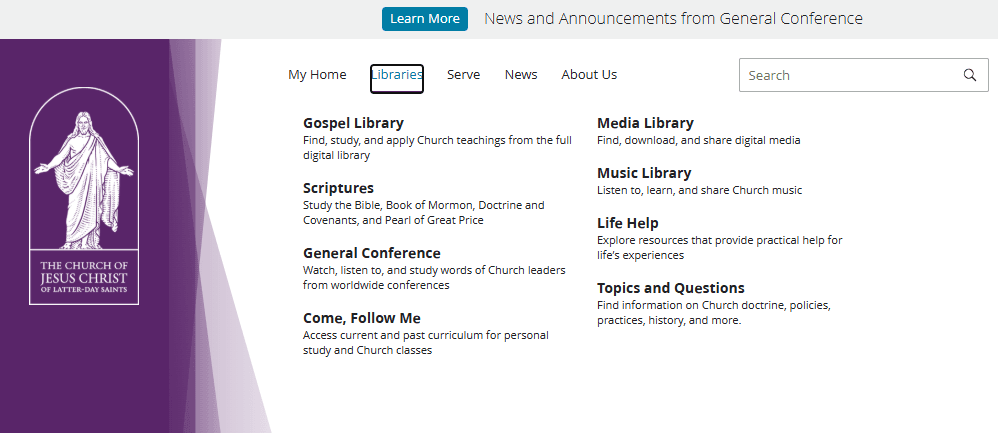
The menu on the Church’s website shows the myriad of resources that enable us to read, study, and better understand the word of the Lord. Through the miracle of the internet and mobile phones, we have access to the scriptures and teachings of prophets and apostles to an extent never before experienced in the history of the world.
If there is a rarity of the word of the Lord in our life, it is not because it is rare, like in Samuel’s day. Clearly, we have an abundance of the word, and it is easily accessible.
The word of the Lord must be valuable to us, or it will be rare
We have easy and convenient access to the word of the Lord, but we must use our agency to access it, or it will be rare for us. We must study it, ponder it, and live it. I believe that every member of the Church has been taught that the way to gain a testimony is to read, ponder, and pray to know whether the Book of Mormon is true.20 The word of the Lord is vital in our efforts to gain, maintain, and strengthen our testimony. That means for the word of the Lord to be valuable to us, we can’t treat it casually.
We must “consume” or “feast” upon the word of the Lord
I love the imagery of consuming the Lord’s word. This symbolic language helps us understand that for the word of the Lord to be valuable to us, we must make it a part of us.
Reading has the power to change us
Worldly understanding recognizes the power of reading. “Bibliotherapy” is a form of therapy to aid mental health, and is an “approach employing books and other forms of literature. . . . Reading a book (particularly a novel) can not only help diminish negative emotions and encourage positive ones, therapists have found, but also heighten an individual’s self-worth and self-esteem.”21
Those benefits apply to worldly literature. But the word of the Lord is more than just nice stories. When we consume or feast upon the word of the Lord, the Holy Ghost will accompany our study, connecting us to God.
Prophets have symbolically used “eating” to describe receiving the word of the Lord
John the Revelator was told by the angel to take the “little book,” and “eat it up.”22 Ezekiel was given a roll and told to eat it.23 Jeremiah talks about eating the words of the Lord.24
The prophet Lehi had a vision where he was also given a book and was told to read it.25 Although Lehi wasn’t told to eat the book, the experiences of John and Lehi were almost identical: they both had an angelic visitor; they were both given a book; John was told to eat the book, whereas Lehi was told to read it; John said the book was bitter in his belly, and Lehi expressed sorrow after reading it, having seen that Jerusalem would be destroyed. In both cases, they consumed the words, or took them to heart.
Nephi pleads with us to “feast upon the words of Christ.”26 In Alma’s discourse about faith, he talks about feasting upon the fruit: “And because of your diligence and your faith and your patience with the word in nourishing it, that it may take root in you, behold, by and by ye shall pluck the fruit thereof, . . . and ye shall feast upon this fruit even until ye are filled, that ye hunger not, neither shall ye thirst.”27
These prophetic teachings all use eating as a symbol for learning the word of the Lord. This imagery is used by the Savior when he taught the Samaritan woman at the well:
If thou knewest the gift of God, and who it is that saith to thee, Give me to drink; thou wouldest have asked of him, and he would have given thee living water. . . .
[W]hosoever drinketh of the water that I shall give him shall never thirst; but the water that I shall give him shall be in him a well of water springing up into everlasting life.28
The gospel of Jesus Christ is meant to be lived. The words of the Lord teach us how to do that. So if we want to live the gospel, we must learn how to live the word of the Lord. We must make His words a part of us.
How do you approach the word of the Lord?
For the Israelites, the word of the Lord was precious because it was rare. But that word also means valuable. So it could be said that the word of the Lord is truly precious for everyone: it is either valuable to us, or it is rare. Because it is so abundantly available, it is our choice whether the word of the Lord becomes valuable or rare.
If we will consume or feast upon the words of Christ, they will be valuable to us. On the other hand, if we just casually listen when we happen to attend meetings, it will be rare. God’s word will only have power in our lives if we allow it to:
- “We all have our agency. We can choose to be of Israel, or not. We can choose to let God prevail in our lives, or not. We can choose to let God be the most powerful influence in our lives, or not.” Russell M. Nelson, “Let God Prevail,” October 2020.
- “Feasting on the words of Christ, as found in the scriptures, stimulates personal revelation. Elder Robert D. Hales said: ‘When we want to speak to God, we pray. And when we want Him to speak to us, we search the scriptures.'” Dale G. Renlund, “A Framework for Personal Revelation,” October 2022.
- “We cannot underestimate the significance of sacred scriptures both in conversions and in remaining faithful in the gospel.” Quentin L. Cook, “Sacred Scriptures-the Foundation of Faith,” October 2024.
The power of the word of God has been stated simply by prophets in every dispensation. Recently, Elder Quentin L. Cook taught in very simple terms how important it is to allow the word of the Lord into our lives:
My counsel for those who have in any way deviated from the covenant path is to return to the sacred scriptures, prophetic guidance, religious observance in the home, and the music of faith.29
The value of the word of the Lord was also stated succinctly by the Savior:
[T]he kingdom of heaven is like unto a merchant man, seeking goodly pearls: Who, when he had found one pearl of great price, went and sold all that he had, and bought it.30
Don’t allow the word of the Lord to be rare in your life. Show the Lord how valuable it is to you by feasting upon the words of Christ. As we consume the word of the Lord through daily study of the scriptures and the words of prophets and apostles, we gain the knowledge and strength we need to follow Christ as His disciples.
References
- 1 Samuel 3:1. ↩︎
- Exodus 24:13. ↩︎
- Exodus 32:1. ↩︎
- Exodus 32:4. ↩︎
- Exodus 20:3-7. ↩︎
- Deuteronomy 32:27-29. ↩︎
- Alma 45:19. ↩︎
- Joshua 1:1-2. ↩︎
- Joshua 24:14-15; Joshua 24:23. ↩︎
- Joshua 23:16. ↩︎
- Judges 2:16-19. ↩︎
- Judges 21:25. ↩︎
- Acts 13:20, “And after that he gave unto them judges about the space of four hundred and fifty years, until Samuel the prophet.” See also Flavius Josephus, “Antiquities of the Jews,” trans. William Whiston, Book V, “From the Death of Moses to the Death of Eli” (Project Gutenberg, 2001), https://www.gutenberg.org/cache/epub/2848/pg2848-images.html#link52H_4_0001. ↩︎
- Cambridge Dictionary, “precious,” https://dictionary.cambridge.org/dictionary/english/precious. ↩︎
- 1 Nephi 11:9. ↩︎
- Alma 31:35. ↩︎
- “1 Samuel 3 (KJV) – And the child Samuel ministered.” Blue Letter Bible. Accessed 5 Apr, 2026. https://www.blueletterbible.org/kjv/1sa/3/1/t_conc_239001; “H3368 – yāqār – Strong’s Hebrew Lexicon (KJV).” Blue Letter Bible. Accessed 5 Apr, 2026. https://www.blueletterbible.org/lexicon/h3368/kjv/wlc/0-1/. ↩︎
- “H3368 – yāqār – Strong’s Hebrew Lexicon (KJV).” Blue Letter Bible. Accessed 5 Apr, 2026. https://www.blueletterbible.org/lexicon/h3368/kjv/wlc/0-1/. ↩︎
- Isaiah 11:9. ↩︎
- Moroni 10:3-5. ↩︎
- Lawrence R. Samuel Ph.D., “The Psychology of Reading: Why a book can be good for mental well-being,” July 23, 2023, https://www.psychologytoday.com/us/blog/psychology-yesterday/202307/the-psychology-of-reading. ↩︎
- Revelation 10:9. ↩︎
- Ezekiel 3:1-3. ↩︎
- Jeremiah 15:16. ↩︎
- 1 Nephi 1:11-13. ↩︎
- 2 Nephi 32:3. ↩︎
- Alma 32:42-43. ↩︎
- John 4:10-14. ↩︎
- Quentin L. Cook, “Sacred Scriptures-the Foundations of Faith,” October 2024, https://www.churchofjesuschrist.org/study/general-conference/2024/10/54cook?lang=eng&id=p_gRh5q#p_gRh5q. ↩︎
- Matthew 13:45-46. ↩︎